China Top Current Transducer Factories & Exporters

Industrial-Grade Hall Effect, Split-Core, Closed-Loop & High-Precision AC/DC Current Sensing Solutions for Global OEMs & Energy Infrastructure

Precision Sensing Portfolio

Featured Current Transducers & Signal Transmitters

Engineered for high-frequency inverters, battery management systems (BMS), railway traction, and industrial automation. Fully customizable outputs (4-20mA, 0-10V, RS485 Modbus) with Class 0.5 accuracy.
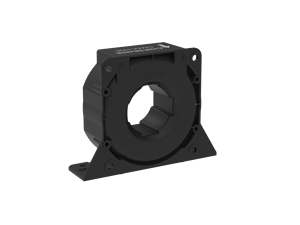
Current Transducer CS5000KA
Current Transducer CS5000KA High Current Heavy Industrial Transducer
0-5000A AC/DC High Galvanic Isolation Closed Loop
Get Catalog
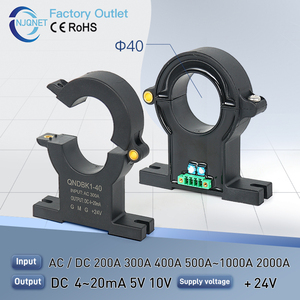
Hall Effect Current Sensor QNDBK1-40
Hall Effect Current Sensor 4-20mA Current Transmitter QNDBK1-40 300a 500a 1000a 2000a 5V 10V Dc Split Core Current Transducer
Split-Core Design 4-20mA / 0-10V 300A-2000A
Get Catalog
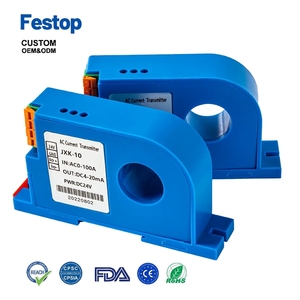
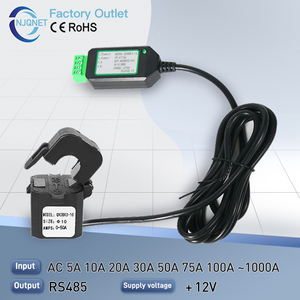
Hall Effect 0-100A Current Transducer RS485
Hall Effect 0-100A 0-10V DC Current Transmitter & AC Current Sensor 4-20mA RS485 22mm 200A-400A AC/DC Current Transducer
RS485 Modbus 22mm Aperture AC/DC Dual Sensing
Get Catalog
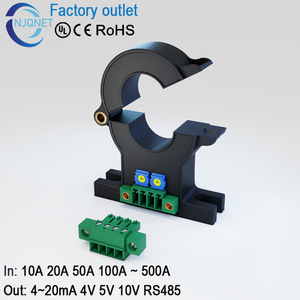
Split Core Clamp Current Transducer
Split Core Current Transmitter 10A 20A 30A 50A 100A 200A DC 420mA 5V 0-10V Clamp Current Transformer Sensor Current Transducer
Clamp-on Structure 10A to 200A Retrofit Ready
Get Catalog
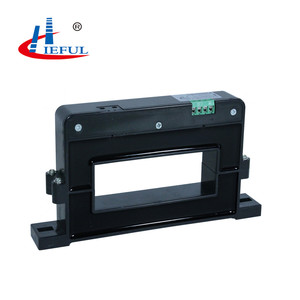
Heavy Duty Industry Closed Loop Sensor
Heavy Duty Industry Mechanical Fixing Reliable Testing Transducer Closed Loop Current Sensor
High Dynamic Range Zero Flux Nulling Vibration Proof
Get Catalog
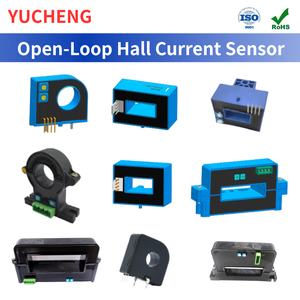
Split Core Open Loop Hall Effect Sensor 2000A
Split Core Open Loop Hall Effect Current Sensor 0-2000A AC/DC Clamp-on Transducer 4-20mA Output High Accuracy 0.5 Class
Class 0.5 Precision 0-2000A Span Open-Loop Flexibility
Get Catalog
CM4A H06 Series High Power Transducer
CM4A H06 Series High Power High Accuracy Hall Effect Closed Loop Current Transducer 1000A Current Sensor LF 1005 Compatible
1000A Nominal Pin-Compatible OEM Replacement <0.2% Linearity
Get Catalog
Hall Effect Sensor QNDBK1-21
Hall Effect Current Sensor 4-20mA Current Transmitter QNDBK1-21 30a 50a 100a 200a 5V 10V Dc Split Core Current Transducer
Compact Footprint 30A-200A Range Low Power Consumption
Get Catalog
25+
Years Manufacturing Excellence
0.1%
Ultra-Low Linearity Error
500k+
Annual Units Exported
100%
Full-Power Burn-In Tested
Technical White Paper

Engineering Blueprint: Selecting & Sourcing High-Precision Current Transducers from Top Chinese Manufacturers

An in-depth analysis of magnetic flux compensation, Hall element thermal drift, response speed dynamics, and strategic procurement frameworks for industrial power conversion systems.

1. Fundamentals of Modern Current Transducer Architectures

In contemporary power electronics—ranging from megawatt-scale solar string inverters to traction drives for electric vehicles—accurate primary current measurement is mandatory for real-time control feedback, thermal protection, and metering. China’s leading current transducer factories have transitioned from basic open-loop magnetic designs to highly integrated, zero-flux closed-loop and digital-bus sensing devices.

Understanding the physics behind these technologies allows design engineers and procurement officers to correctly match transducers to specific electromagnetic operational environments:

  • Open-Loop Hall Effect Transducers: Utilize a magnetic core to concentrate the flux generated by the primary conductor passing through an aperture. A semiconductor Hall element inserted into the magnetic core gap measures the flux density ($B$), producing a voltage proportional to the primary current. While cost-effective and lightweight, open-loop transducers exhibit inherent saturation vulnerabilities under extreme overcurrent events and higher thermal gain drift compared to closed-loop variants.
  • Closed-Loop (Zero-Flux / Magnetic Balance) Transducers: Feature a secondary compensation winding wound around the magnetic core. The output voltage from the embedded Hall sensor drives an internal amplifier, driving a counter-current through the secondary winding to continuously cancel the primary flux. Operating at zero magnetic flux ($\Phi = 0$) eliminates non-linearity issues and core hysteresis errors, delivering superior response speeds ($\le 1\mu s$), wide frequency bandwidth (DC to 200kHz), and extreme thermal stability across temperature ranges from $-40^\circ\text{C}$ to $+85^\circ\text{C}$.
  • Split-Core & Clamp-On Transducers: Designed specifically for retrofit energy monitoring, sub-metering, and non-intrusive industrial upgrades. Featuring hinged magnetic cores made of high-permeability silicon steel or nanocrystalline alloys, these transducers allow installation without disconnecting primary busbars or power cabling. Modern split-core designs engineered in China incorporate spring-loaded precision contact joints to minimize magnetic gap resistance variations caused by mechanical vibration or thermal expansion.

Sub-Microsecond Latency

Closed-loop Hall effect topology ensures response time $\le 1\mu s$, enabling instantaneous short-circuit protection in SiC/GaN wide-bandgap inverters.

Digital RS485 Integration

Integrated signal conditioning supporting Modbus-RTU protocol alongside traditional analog 4-20mA and 0-10V industrial control loops.

High Galvanic Isolation

Reinforced dielectric isolation up to 6kV RMS between primary conductor aperture and secondary measurement electronics.

2. Technology Comparison Matrix: Transducer Selection Parameters

To assist global procurement officers and system integrators in evaluating current sensor options, China's tier-1 manufacturers utilize strict quantitative performance benchmarks. The following data visualization matrix illustrates key technical trade-offs across common sensor topographies:

Transducer Topology Accuracy Class Frequency Response Thermal Drift Isolation Voltage Best Industrial Use Case
Open-Loop Hall Effect Class 1.0 (1.0%) DC to 25 kHz $\pm 0.05\% / ^\circ\text{C}$ 3.0 kV AC / 1 min Variable frequency drives (VFD), basic solar combiner boxes
Closed-Loop Hall Effect Class 0.2 - 0.5 (0.2%) DC to 150-200 kHz $\pm 0.01\% / ^\circ\text{C}$ 5.0 - 6.0 kV AC EV traction inverters, UPS systems, medical MRI gradient amplifiers
Split-Core Current Transmitter Class 0.5 - 1.0 50/60 Hz AC or DC $\pm 0.03\% / ^\circ\text{C}$ 3.5 kV AC Smart grid sub-metering, retrofitting factory automation lines
Fluxgate Precision Sensor Class 0.05 (<0.05%) DC to 500 kHz $\pm 0.002\% / ^\circ\text{C}$ 6.0 kV RMS High-precision metrology, particle accelerator power supplies, calibration rigs

3. Future Sourcing Trends: China's Role in Next-Gen Current Transducer Exporting

As the global transition to renewable energy accelerates, the demand for high-reliability current transducers has grown exponentially. China has emerged as the premier manufacturing hub for power electronics components due to complete supply chain integration, domestic availability of rare-earth neodymium magnetic core materials, advanced silicon steel processing, and automated SMT assembly facilities.

Key procurement trends defining the next decade of transducer sourcing include:

  • Custom Busbar & Enclosure Integration (OEM/ODM): Rather than purchasing off-the-shelf standalone sensors, international OEMs increasingly demand integrated busbar-transducer assemblies. Top Chinese factories utilize multi-physics finite element analysis (FEA) software to simulate thermal dissipation and stray magnetic field interference, delivering custom molded units designed to drop directly into compact inverter enclosures.
  • Shift Toward Digital & Smart Output Signals: Traditional 4-20mA current loops and analog 0-5V outputs are rapidly giving way to smart digital interfaces. Transducers embedded with microcontrollers featuring RS485 Modbus, CANopen, or Ethernet/IP permit real-time predictive maintenance, internal temperature self-monitoring, and overcurrent fault logging.
  • Compatibility with High-Frequency Wide-Bandgap (SiC & GaN) Semiconductors: Silicon Carbide (SiC) and Gallium Nitride (GaN) power switches operate at switching frequencies exceeding 100kHz with extremely steep $dV/dt$ voltage transitions. Leading Chinese exporters now incorporate advanced electro-magnetic shielding ($EMI$) and high bandwidth compensation circuitry to prevent common-mode noise corruption during rapid switching transients.
  • Nanocrystalline Core Material Adoption: Transitioning from conventional ferrite or silicon-steel cores to ultra-fine grain nanocrystalline magnetic alloys has allowed manufacturers to cut transducer core losses by up to 60%, while drastically improving magnetic saturation thresholds under transient overcurrent spikes.

4. Enterprise Manufacturing Standards & E-E-A-T Quality Assurance

Selecting a verified Chinese exporter requires evaluating strict quality assurance protocols. Premier production facilities operate under ISO9001 quality management, ISO14001 environmental management, and IATF 16949 automotive quality standards. Every transducer produced undergoes full automated optical inspection (AOI), laser trim offset calibration, voltage withstand isolation testing, and a mandatory 100% full-power burn-in process at elevated ambient temperatures prior to export packaging.

Compliance with international standards—including CE, RoHS, UL 94-V0 flame retardancy for encapsulation resin, and REACH environmental safety—ensures smooth customs clearance and seamless compliance for systems destined for North American and European Union markets.

Procurement & Technical Support

Frequently Asked Questions (FAQ)

Essential technical guidance for international buyers, electrical design engineers, and supply chain managers.

What is the difference between open-loop and closed-loop Hall effect current transducers?
Open-loop current transducers measure the magnetic flux created by the primary current directly via a Hall generator element. They are lower cost, compact, and consume minimal operating power. Closed-loop (zero-flux) transducers use an active feedback loop to generate a secondary counter-current that cancels the primary magnetic flux. Closed-loop transducers offer significantly higher accuracy (Class 0.2-0.5 vs Class 1.0), faster response times (<1μs), wider frequency bandwidth, and lower thermal offset drift, making them ideal for high-performance inverters and precision power monitoring.
Can split-core current transducers measure both AC and DC currents simultaneously?
Yes, split-core transducers utilizing Hall effect sensing elements can measure both AC and DC current components simultaneously. Traditional current transformers (CTs) operate strictly on magnetic induction and can only measure AC current. When selecting a split-core unit for DC or mixed AC/DC application (such as battery energy storage systems), ensure the specification explicitly indicates Hall Effect or Fluxgate technology with DC response capability.
What standard output signal options do Chinese current transducer manufacturers offer?
Chinese current transducer factories provide a comprehensive range of standardized analog and digital signal outputs. Analog outputs include instantaneous voltage (e.g., 0-5V, 0-10V, ±4V, ±5V) or current loop signals (4-20mA DC, 0-20mA). For digital industrial networks, transducers can be equipped with RS485 Modbus-RTU, CANbus, or 0-5V PWM digital outputs for direct microcontroller integration.
How do I prevent thermal drift in high-current measurement applications?
Thermal drift occurs when ambient temperature variations shift the transducer’s zero-current offset voltage or gain linearity. To minimize thermal drift, specify closed-loop Hall effect or fluxgate transducers featuring internal temperature compensation circuits. Additionally, selecting models encapsulated with high thermal conductivity epoxy resins (UL 94-V0 rated) and using busbars engineered with sufficient cross-sectional area will prevent excessive primary conductor heat from transferring to internal electronics.
What lead times and OEM customization options can be expected for export orders?
Standard current transducer catalog items typically ship within 1 to 2 weeks. Custom OEM/ODM orders—including specialized aperture sizes, custom primary busbar mounting hardware, specific secondary pinout configurations, or custom output scaling—generally require 3 to 5 weeks for tooling, prototyping, and compliance testing. Leading Chinese exporters provide full engineering support, including CAD step models, magnetic simulations, and sample validation kits prior to mass production.
Direct Factory Sourcing

Request Technical Specifications & Wholesale Quotation

Connect directly with our senior application engineering team. Receive comprehensive product datasheets, CAD 3D models, pin-to-pin replacement cross-reference guides, and competitive factory-direct export pricing.