
Precision hardware engineered for lithium-ion cell, module, and pack-level emulation across R&D and automated production environments.
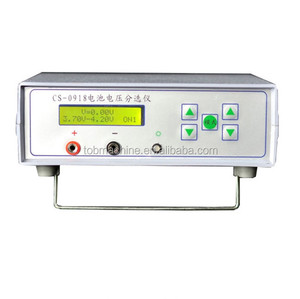
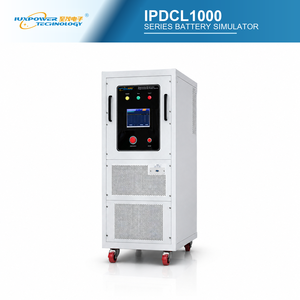
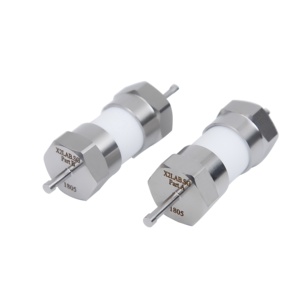
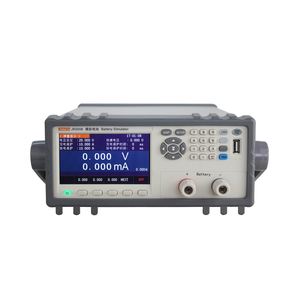
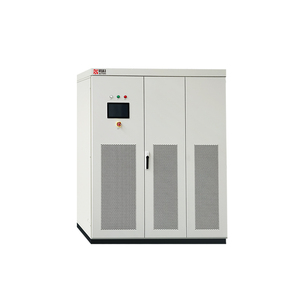
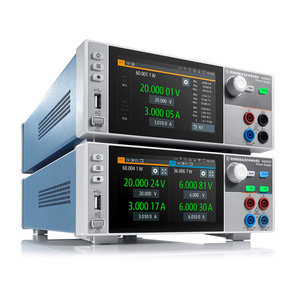
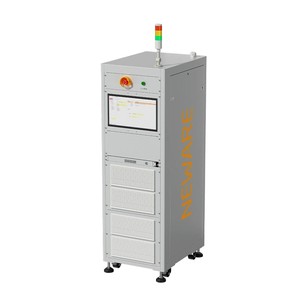
Modern electrical powertrains, grid-scale Energy Storage Systems (ESS), and wearable IoT devices demand rigorous testing environments that replicate real-world electro-chemical dynamics without the safety risks, operational latency, and degradation associated with physical lithium-ion battery chemistry. As China's premier manufacturer and global exporter of high-precision Battery Simulators, our equipment transitions automated test stations from passive DC power sourcing to active, bidirectional electro-chemical emulation.
A true battery simulator differs fundamentally from a programmable DC power supply. While standard power supplies maintain steady-state voltage or current, an industrial-grade battery simulator continuously models the Internal Resistance ($R_i$ / ESR), State of Charge (SOC), State of Health (SOH), dynamic open-circuit voltage ($V_{oc}$), and non-linear charge/discharge curves in real-time. This dynamic capability enables powertrain engineers to execute dynamic torque load tests, micro-second energy recovery validation, and full-scale failure mode analysis safely inside hardware-in-the-loop (HIL) test suites.
| Functional Parameter | Standard Programmable DC Source | Bidirectional DC Electronic Load | High-Dynamic Battery Simulator |
|---|---|---|---|
| Quadrant Operation | 1-Quadrant (Source Only) | 1-Quadrant (Sink Only) | 2-Quadrant / 4-Quadrant Seamless Switching |
| Transient Response Time | > 20 ms – 100 ms | > 10 ms – 50 ms | < 1 ms (Ultra-Fast Microsecond Response) |
| Internal Impedance Simulation | Static / Non-existent | Fixed Resistance Setting | Dynamic $R_i$ Emulation (0–1000 mΩ Curve Controlled) |
| Energy Regeneration | None (Thermal Dissipation) | Selective Grid Feed-in | Up to 96% Grid Feedback Efficiency |
| Cell Balancing Validation | Unsupported | Unsupported | Active/Passive High-Current Channel Sinking & Sourcing |
Designed for battery management system (BMS) developers, automotive OEMs, and electrochemical research centers worldwide.
Featuring sub-millisecond dynamic switching between sourcing current to simulate motor drive acceleration and sinking current to emulate regenerative braking energy feed-in. Zero current crossing distortion guarantees smooth load transitions.
Configurable multi-channel systems (such as 24-channel micro-cell emulators) offering micro-amp precision, isolated channel grounding, and individual cell voltage programming from 0 to 6V to validate complex BMS active balancing networks.
Integrates physical relay-based fault insertion hardware capable of simulating line disconnects, wire breakages, reverse polarity connections, high-resistance short circuits, and localized thermal runaway sensor feedback.
As international regulations shift toward sustainable electrification, procurement managers and test station engineers face rising technical demands. Understanding key technology trajectories ensures long-term ROI on capital equipment investments.
Automotive OEMs are accelerating the adoption of 800V high-voltage platforms to drastically reduce passenger vehicle charging times. Consequently, procurement teams are retiring legacy 400V test gear in favor of high-voltage battery simulators reaching up to 1500V DC operating windows. Our high-voltage simulators utilize SiC power switching devices, achieving higher power density, lower switching losses, and cooler thermal envelopes under continuous full-load testing.
Renewable energy storage deployment requires grid-tied inverters and commercial ESS cabinets capable of delivering megawatt-level outputs. Modern battery simulators must scale up to 1.5MW+ in single-cabinet configurations, with modular master-slave capability allowing parallel expansion up to 10MW. Integrated energy regeneration capability—feeding up to 96% of absorbed energy back into the facility AC grid—is now a standard procurement requirement to reduce utility cooling costs.
At the opposite end of the power spectrum, small electronics, wearable health monitors, and smart IoT nodes rely on miniature lithium coin cells (CR2032, CR2016). Testing these devices requires micro-amp current measurement resolution and ultra-low noise output to accurately evaluate sleep-mode drain versus wake-up transmission spikes without adding artificial ripple noise.
As a vertically integrated engineering manufacturer headquartered in China, we combine rapid prototype iteration, ISO 9001 certified manufacturing, and rigorous quality assurance protocols to supply global automotive and laboratory clients.
From CNC enclosure fabrication and custom transformer magnetic winding to surface-mount PCB assembly and high-voltage burn-in testing, our entire manufacturing pipeline operates under unified ISO management for reliable quality control and 4-6 week lead times.
All exported simulators carry CE, UL-compliant design architectures, and RoHS certifications. Standard communication options include Ethernet/LXI, CAN-FD, RS485, USB, and isolated analog interfaces with native LabVIEW, IVI, and Python driver support.
Detailed technical answers addressing common procurement and operational inquiries.
Electrochemical battery cells exhibit variable internal resistance depending on State of Charge (SOC), cell temperature, and age (SOH). A simulator capable of real-time $R_i$ adjustment allows engineers to verify whether a BMS can accurately estimate cell voltage drops during high-current discharge bursts without triggering false under-voltage fault codes.
Our battery simulators support high-speed Ethernet (TCP/IP), CAN bus / CAN-FD, RS-232/RS-485, and optional IEEE-488 (GPIB) communication. Units process standard SCPI commands and provide high-speed analog control options for real-time dSPACE, NI VeriStand, or OPAL-RT HIL integrations.
Yes. The flexible mathematical model engine allows custom $V_{oc}$ vs. SOC curve programming via CSV file upload or mathematical polynomial input. This enables realistic emulation of LFP, NMC, LTO, Solid-State, and emerging Sodium-Ion battery behaviors.
Our high-power systems include hardware-based emergency stop (E-Stop) loops, programmable over-voltage (OVP), over-current (OCP), over-temperature (OTP) protections, reverse-polarity detection circuits, and output short-circuit energy-limiting inductors to protect connected devices under test (DUT).
We provide remote diagnostic firmware support, comprehensive open SCPI API documentation, and factory calibration procedures traceable to NIST/ISO standards. Spare module swapping kits are available for overseas production lines to maintain zero downtime.
Contact our senior power applications team to request technical datasheets, custom channel configurations, or factory-direct price quotes for your project requirements.
Contact Us