China Best Voltage Source Manufacturers & Suppliers

High-Precision Programmable DC Power Supplies, Bipolar Battery Simulators & Multi-Channel BMS Test Systems

Precision Instrument Catalog

Featured Voltage Sources & Battery Simulators

Engineered for electrochemical research, EV battery pack testing, BMS validation, and high-power industrial semiconductor characterization.
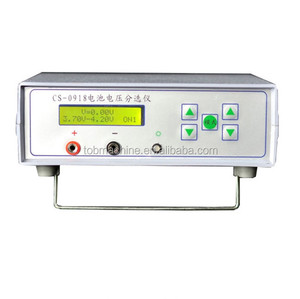
Lithium Ion Battery Voltage Current Capacity Tester

Lithium Ion Battery Voltage Current Capacity Tester

Inquire Now
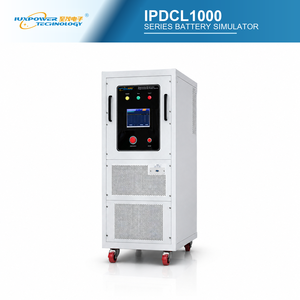
IPDCL1000 Series 220V 1KW High-Precision Battery Simulator

IPDCL1000 Series 220V 1KW High-Precision Battery Simulator Constant Power Testing Equipment

Inquire Now
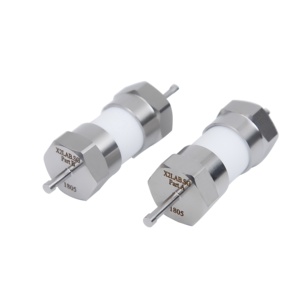
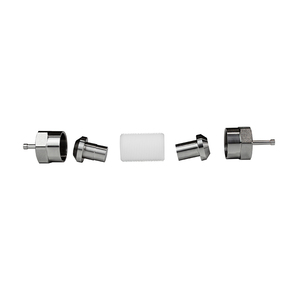
Removable Coin Battery Simulator

Removable Coin Battery Simulator for Coin Cell Electrochemical Testing

Inquire Now
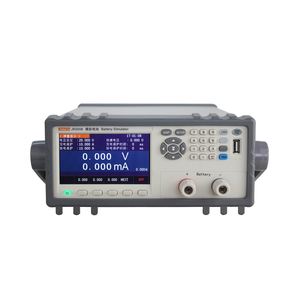
JK5506 Battery Simulator

JK5506 Multi-Channel High-Precision Battery Simulator

Inquire Now
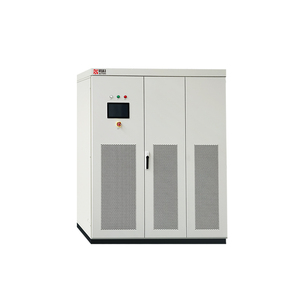
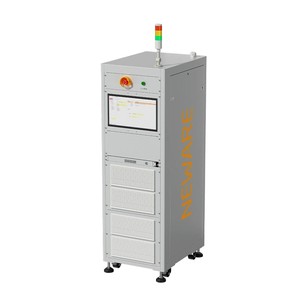
High-Precision Battery Simulator 150-1000KW

High-Precision High-Dynamic Programmable Battery Simulator (150kW - 1000kW)

Inquire Now
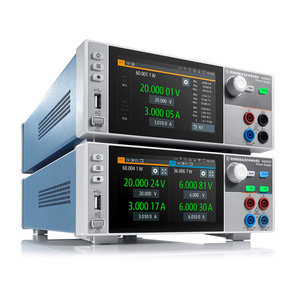
Rohde & Schwarz NGM201-NGM202 DC Power Bipolar Battery Simulator

NGM201/NGM202 Series Industrial DC Bipolar Battery Simulator Power Supply

Inquire Now
Coin Cell Simulator CR2032 CR2016

Coin Cell Simulator (CR2032/CR2016) for Electrochemical Laboratory Research

Inquire Now
24-Channel Battery Cell Simulator BMS Validation

24-Channel Battery Cell Simulator for BMS Validation & SOC Balance Testing

Inquire Now
0.01%
Voltage Source Accuracy
< 1 ms
Dynamic Transient Response
10 MW+
Max Parallel Power Capacity
100%
In-House Burn-in Verified
E-E-A-T Technical Baseline

Vertically Integrated Manufacturing & Current-Fed Power Conversion Architecture

Modern electrical testing demands robust voltage sourcing that withstands high inductive kickback, rapid dynamic load changes, and strict low-noise ripple limits. Leading Chinese manufacturers are driving global technological innovation through proprietary topologies, rigorous quality control, and end-to-end integration.

Current-Fed Topology Architecture

Unlike conventional voltage-fed power supplies that rely on large capacitor banks, leading high-precision DC voltage sources utilize an inductive energy storage topology. This provides inherent immunity to output short-circuits and prevents destructive current surges during rapid capacitive load cycling.

By storing energy magnetically rather than electrostatically on the primary DC bus, the system achieves unprecedented stability across wide operating voltage profiles, making it ideal for electric vehicle traction motor inverter testing.

Vertical Manufacturing Control

Full domestic vertical integration—from CNC sheet metal machining, planar transformer copper winding, and SMT PCB assembly to full-power burn-in validation—guarantees total control over product reliability and component supply chains.

Standard lead times are compressed to 4 to 6 weeks for custom megawatt-scale testing rigs, ensuring global buyers receive precise configurations without schedule overruns.

Low Ripple & Ultra-Fast Slew Rates

By implementing linear MOSFET sinking stages combined with high-frequency Silicon Carbide (SiC) switching devices, output voltage ripple is maintained at < 1mV RMS. Voltage recovery rates under 90% step loads occur in under 100 microseconds.

This metrology-grade performance allows researchers to simulate precise electrochemical cell behavior during impedance spectroscopy and transient pulse testing.

Engineering Matrix

Voltage Source & Battery Simulator Technical Matrix

Compare power conversion topologies, dynamic response profiles, and target applications to select the correct instrument hardware architecture.

Product Series / Type Power Range Voltage Output Transient Response Cooling Method Core Target Applications
Coin Cell Simulator Series 1W – 50W 0 – 6V DC < 50 µs Convection Air CR2032/CR2016 Cell Testing, Electrochemical Sensor Calibration
Multi-Channel BMS Cell Simulator 100W – 2kW (24-Ch) 0 – 5V / Channel < 100 µs Internal Forced Air BMS Hardware-in-the-Loop (HIL) SOC Estimation & Balancing
IPDCL High-Precision Simulator 1kW – 10kW 0 – 220V / 600V < 500 µs Smart Variable Fans Automotive ECU Testing, DC-DC Converter Burn-in Racks
Industrial Bi-Polar DC Source (NGM) 100W – 5kW -30V to +30V Dual < 30 µs (Linear) Quiet Air Cooling Semiconductor Characterization, Low-Noise Medical Electronics
Megawatt Regenerative Simulator 150kW – 10MW 0 – 1500V DC < 1 ms (Bi-directional) Closed-Loop Liquid EV Battery Pack Emulation, Grid-Scale ESS, Wind Tunnel Arc Power
Industry Trend 2026-2030

1. Shift Toward Wide-Bandgap (SiC/GaN) Power Modules

The global transition toward higher DC bus voltages in electric transport (scaling from 400V to 800V and 1200V architectures) has forced power equipment manufacturers to adopt Silicon Carbide (SiC) MOSFET switch stages.

SiC-based programmable DC voltage sources offer dramatically higher switching frequencies (up to 100kHz+), reducing physical magnetic component sizing while achieving overall power conversion efficiencies exceeding 96.5%. For buyers, this translates into lower rack space requirements (1U/2U form factors delivering up to 10kW) and lower facility HVAC cooling costs.

Next-Gen Sourcing Paradigm

2. Bi-Directional Regenerative Capability & Grid Integration

Modern procurement specifications increasingly reject single-quadrant source-only equipment. Future-proof test bays demand bi-directional seamless transition between sourcing current (acting as a generator) and sinking current (acting as a regenerative load).

When evaluating battery simulators, advanced Chinese suppliers incorporate active front-end (AFE) inverter stages that return up to 95% of absorbed energy back to the local AC utility grid, reducing heat rejection inside the laboratory environment and significantly decreasing total cost of ownership (TCO).

Information Gain FAQ

Engineering Procurement FAQ: Voltage Sources & Simulators

Addressing essential technical specs, calibration protocols, and systemic interlock safety considerations for international procurement teams.

What distinguishes a standard programmable DC supply from a true Battery Simulator?

A standard programmable DC power supply operates primarily as a single-quadrant constant voltage (CV) or constant current (CC) source with slow output capacitance discharge rates. In contrast, a true Battery Simulator features bi-directional power flow, ultra-low programmable output resistance ($R_i$ emulating internal cell resistance from 0 to several Ohms), dynamic state-of-charge (SOC) math models, and fast current sink capability. This allows the instrument to emulate cell voltage drop during acceleration surges and regenerative braking pulses in real-time without external load banks.

How does multi-channel isolation work in BMS Validation Simulators (e.g., 24-Channel units)?

In BMS Hardware-in-the-Loop (HIL) testing, each simulated battery cell channel must be galvanically isolated from adjoining channels and chassis ground to tolerate high series stack voltages (up to 1000V DC). Quality cell simulators utilize channel-to-channel optical or digital isolation rated at 1000V to 1500V DC continuous isolation voltage, featuring independent 16-bit D/A converters per channel to simulate cell voltage imbalances, open-wire faults, and temperature sensor outputs accurately.

What remote programming protocols and software interfaces are supported?

All modern Chinese industrial voltage sources come standard with Ethernet/LXI, USB, and RS-232/RS-485 interfaces, with options for IEEE-488 (GPIB) and industrial Modbus-TCP. Native support for Standard Commands for Programmable Instruments (SCPI) ensures straightforward integration into existing automated test equipment (ATE) environments using National Instruments LabVIEW, MATLAB, Python, or C# software suites.

Why is current-fed power processing preferable for high-power industrial applications?

Current-fed topologies place a smoothing inductor at the inverter input, limiting short-circuit fault current naturally through inductive impedance. When testing dynamic loads subject to frequent breakdown or arcing—such as plasma coating, particle accelerator magnets, high-voltage semiconductor double-pulse testing, and arc-heater wind tunnels—current-fed sources prevent voltage collapse and equipment trips, delivering superior long-term reliability compared to traditional voltage-fed supplies.

What thermal management choices are available for cleanroom versus factory floor deployments?

Air-cooled units with variable-speed smart fan controls suit standard ATE racks up to 100kW where laboratory HVAC capacity is sufficient. For high-power continuous testing (150kW to 10MW+) or cleanroom environments where acoustic noise and heat rejection are strictly regulated, water-cooled architectures utilizing closed-loop liquid-to-water heat exchangers are recommended. Liquid cooling isolates internal electronics from ambient industrial contaminants while reducing cabinet footprints by up to 60%.

What calibration certification and quality assurance documents are supplied upon delivery?

Every instrument undergoes 100% full-power thermal burn-in testing prior to shipment. Units ship with a factory calibration certificate traceable to national metrology standards (such as NIM or ISO/IEC 17025 accredited labs). Comprehensive technical documentation includes factory acceptance test (FAT) reports, SCPI programming manuals, schematic interface pinouts, and CE/RoHS compliance certification.

Consult an Applications Senior Power Engineer

Require custom voltage ranges, ultra-low ripple options, high-voltage blocking diodes, or multi-channel BMS HIL hardware setups? Send your exact duty-cycle, power level, and dynamic response specifications directly to our engineering desk.

Inquire Now