
Explore industrial-grade bi-directional power systems engineered for cell balancing, pack characterization, BMS HIL validation, and grid energy recycling.
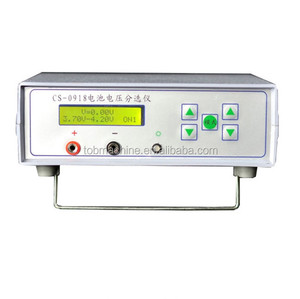
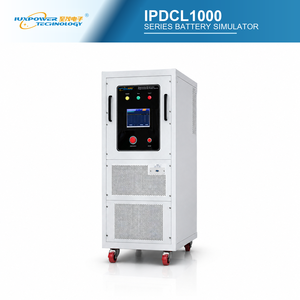
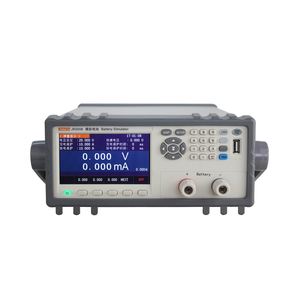
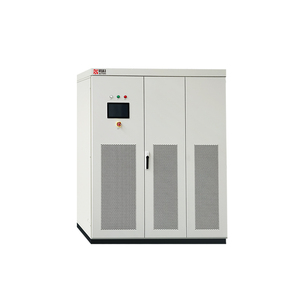
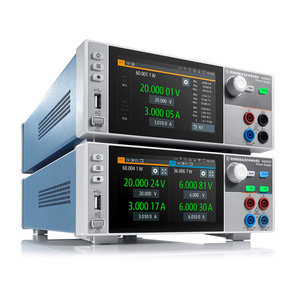
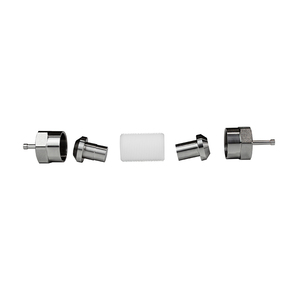
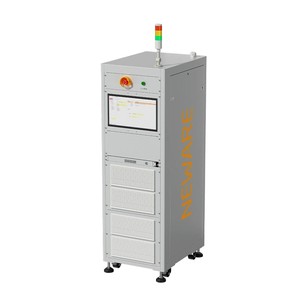
China has established itself as the global epicenter for energy storage system (ESS) manufacturing and electric vehicle (EV) testing hardware. Sourcing regenerative loads requires deep architectural scrutiny.
Unlike third-party assemblers, top-tier Chinese manufacturers manage complete fabrication cycles in-house: high-frequency magnetic winding, planar transformer design, SMT circuit board populating, sheet metal enclosure manufacturing, and 100% full-power burn-in validation under extreme thermal stress.
Utilizing Active Front End (AFE) technologies combined with SiC MOSFET switching stages, Chinese regenerative load banks convert dissipated DC energy back into clean, synchronized AC grid power with total harmonic distortion (THD) below 3%, achieving energy recovery rates up to 96.8%.
Safety is non-negotiable in regenerative testing systems. Leading OEMs integrate dual redundant islanding protection, phase-locked loop (PLL) grid tracking, over-voltage/over-current hardware interlocks, and CE/UL compliance for flawless operation on European and North American power grids.
Understanding the internal power electronics architecture is essential when procuring regenerative electronic loads for high-dynamic EV battery and fuel cell testing applications.
Traditional electronic loads dissipate absorbed DC power as thermal energy through resistor banks or air-cooled MOSFET heatsinks. Even early-generation regenerative loads built on Silicon IGBTs suffered from switching frequencies capped around 10–20 kHz, resulting in large inductive filter components, acoustic noise, higher THD, and slow transient response (>10ms).
Modern Chinese regenerative load factories leverage Silicon Carbide (SiC) power semiconductors operating at switching frequencies up to 100 kHz. This enables microsecond dynamic current slew rates (>10A/µs), drastically smaller magnetic components, higher power density (up to 100kW per 3U chassis), and reduced cooling requirements—yielding immense operational energy savings.
| Performance Specification | Resistive / Passive Loads | Legacy Electronic Loads | Modern Regenerative Loads (China Factory Standard) |
|---|---|---|---|
| Energy Recovery Efficiency | 0% (Heat Dissipated) | 0% (Heat Dissipated) | 95.0% – 96.8% (Grid Feed) |
| Dynamic Slew Rate | Fixed / Manual Step | 1A/µs – 2.5A/µs | Up to 12A/µs (SiC Driven) |
| Power Density | Low (Large Space Required) | Medium (5kW – 10kW per 3U) | Ultra-High (up to 30kW – 100kW per 3U) |
| AC Grid Harmonic Distortion (THD) | N/A | N/A | < 3% (IEEE 519 Compliant) |
| HVDC Bus Range | Static Voltage Rating | 0 – 600 VDC | 0 – 1500 VDC / 2250 VDC Ultra-Wide |
| Operating Modes | R Only | CC, CV, CR, CP | CC, CV, CR, CP, Battery Sim, Solar Array (APVP) |
Strategic insights for procurement directors, test bench integrators, and laboratory managers evaluating multi-year hardware investments.
Procurement is shifting away from purchasing separate programmable DC power supplies and electronic loads. Global OEMs are standardizing on 4-quadrant bi-directional DC power supplies that seamlessly transition between sourcing current (battery charging) and sinking current (regenerative load discharge) with zero cross-over latency. This doubles ATE rack utilization while halving footprint costs.
With commercial energy storage systems (BESS) and electric heavy transport transitioning to 1000V+ bus architectures, test equipment must support wide operating envelopes. Procurement requirements in 2026 mandate master-slave parallel capabilities reaching multi-megawatt (10 MW+) ratings while maintaining sub-millisecond synchronization across cabinet clusters.
Modern regenerative loads are no longer isolated benchtop instruments. Sourcing specifications now require ultra-low latency optical bus interfaces (EtherCAT, CANopen, Modbus TCP) to connect directly with RTDS or dSPACE real-time simulation hardware. This enables hardware-in-the-loop BMS algorithm validation, electrochemical impedance spectroscopy (EIS), and simulated drive cycle replay (WLTP, US06).
With electricity costs escalating globally, testing a 1 MW energy storage container on traditional passive loads consumes over 1,000 kWh of energy per hour, plus substantial cooling HVAC power. Regenerative load banks feed up to 965 kW back to the facility grid, turning electricity expenditure into operational recovery and directly fulfilling corporate ESG/ISO 50001 energy management targets.
Essential technical and commercial answers for sourcing managers and test engineers evaluating Chinese regenerative load manufacturers.
A conventional DC electronic load absorbs electrical power from a device under test (DUT)—such as a battery pack, fuel cell stack, or power supply—and converts 100% of that energy into thermal heat via internal resistors and cooling fans. In contrast, a regenerative electronic load contains an active grid-tied inverter stage (Active Front End). Instead of dissipating power as thermal waste, it converts the absorbed DC power back into high-quality AC power and feeds it directly back into the factory's three-phase AC power grid. This saves up to 96.8% of energy costs and dramatically reduces ambient facility heat load.
Leading Chinese factories design regenerative load platforms in strict compliance with international grid connection standards including IEEE 1547, EN 50549, and UL1741. The equipment incorporates dual-layer anti-islanding protection (both passive frequency/voltage monitoring and active frequency drift injection). If utility grid power is lost or fluctuates outside safety limits, the internal hardware interlock disconnects the inverter stage in under 10 milliseconds, preventing dangerous back-feeding during utility outages.
Standard rack-mount configurations (1.5 kW to 30 kW 1U–3U chassis) typically carry factory lead times of 2 to 4 weeks. High-power custom cabinet systems (100 kW to 2 MW+) require approximately 4 to 6 weeks for complete fabrication, magnetics winding, customer-specific firmware flashing, and full burn-in testing. Chinese OEMs provide broad customization, including high dynamic slew rate options, liquid cooling manifold integrations, custom SCPI command emulation, and localized touchscreen language interfaces.
Standard factory communications include Ethernet (LXI-compliant), USB, RS485/RS232, and isolated analog control (0-5V/0-10V). High-speed automation options include CANopen, EtherCAT, Modbus TCP, and IEEE-488 (GPIB). Instruments support standard SCPI protocol command sets and are delivered with native LabVIEW, IVI drivers, Python API libraries, and C++ software integration SDKs for seamless ATE integration.
Air-cooled regenerative loads are highly cost-effective and suitable for standard laboratory testing up to 100 kW where ambient HVAC can manage moderate heat loads. However, for continuous megawatt-scale testing (150 kW to 10 MW+), multi-channel BMS balancing, or cleanroom/dust-free testing environments, water-cooled regenerative loads are recommended. Liquid cooling reduces unit noise to sub-65 dBA, slashes cabinet volume by up to 60%, and operates reliably in high ambient temperature environments.
Reputable China regenerative load manufacturers provide a standard 2-year to 5-year factory warranty. Calibration certificates (traceable to ISO/IEC 17025 standards) accompany each unit. Global service models include modular board-level swapping, remote diagnostic logging via Ethernet, fast-ship replacement components, and regional engineering field support across North America, Europe, Southeast Asia, and Australia.
Talk directly with senior power electronics application engineers to configure your high-voltage, high-current bi-directional test setup.