
Engineered for rigorous industrial standards, electrochemical laboratories, and BMS validation testing.
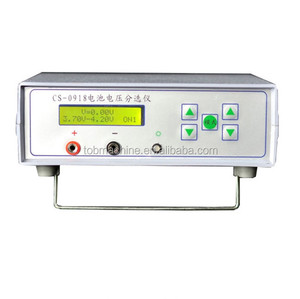
Designed for high-accuracy cycle testing, automated capacity grading, and dynamic V/I monitoring of lithium chemistry cells.
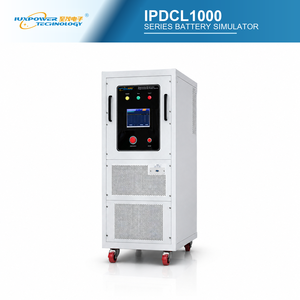
Constant power function testing equipment with fast dynamic response, sub-millisecond voltage switching, and programmable output curves.
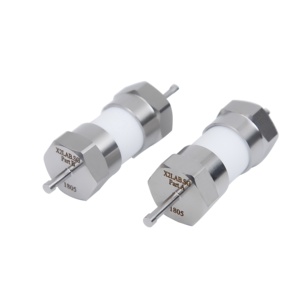
Modular coin cell hardware emulator engineered for low-power IoT device validation, micro-drain characterization, and continuous R&D testing.
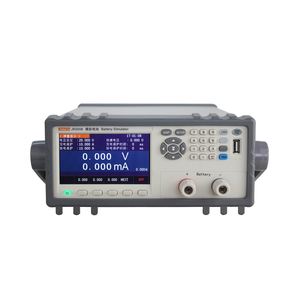
Compact benchtop multi-channel DC power supply specifically optimized for battery management system functional verification and automated testing.
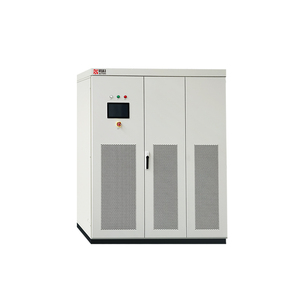
Megawatt-class bidirectional programmable DC supply built for EV powertrain verification, grid-tied inverter testing, and heavy industrial loads.
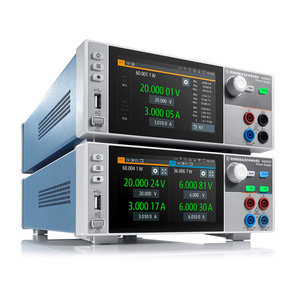
Ultra-low ripple, 2-quadrant bipolar DC source providing linear power sinking and sourcing capability with 100-240V wide AC input range.
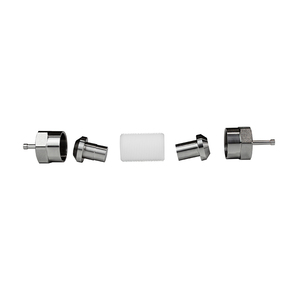
High-precision laboratory simulator engineered to emulate dynamic internal resistance and voltage discharge profiles of standard CR2032/CR2016 cells.
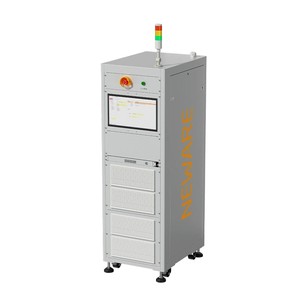
Precision multi-cell stack hardware emulator featuring isolated channel control, active cell balancing strategy evaluation, and SOC estimation validation.
Combining proprietary current-fed topology, rigorous 100% full-power burn-in validation, and state-of-the-art power conversion engineering.
Unlike conventional voltage-fed power supplies that rely heavily on large output filter electrolytic capacitors, our proprietary current-fed power processing topology stores energy in an input inductor. This design inherently limits short-circuit fault currents, provides immunity against inductive load back-EMF, and guarantees outstanding operational lifespan in extreme industrial environments.
From precision sheet metal laser cutting, CNC machining, and automated magnetic core transformer winding to SMT surface-mount PCB assembly and final environmental chamber stress testing—every single step is controlled within our vertically integrated facilities. This guarantees complete quality traceability and industry-leading lead times.
Our advanced high-precision battery simulators feature real-time mathematical battery cell models (including Lithium Iron Phosphate LiFePO4, NMC, LTO, and Solid-State chemistries). Capable of dynamic SOC calculation, programmable DC internal resistance (DCIR) emulation, and multi-channel high-speed isolated current measurement for BMS testing.
Comprehensive technical breakdown of China premier industrial DC power supplies and multi-channel battery emulators.
| Series Platform | Power Output Range | Voltage / Current Envelope | Dynamic Response Speed | Cooling Architecture | Primary Industrial Applications |
|---|---|---|---|---|---|
| Low-Power Micro Simulator | 0.1W – 50W (Coin Cell Range) | 0 – 6V / 0 – 10A | < 10 µs | Convection / Air Cooled | Electrochemical R&D, CR2032/2016 battery emulation, Wearable IoT testing. |
| Multi-Channel BMS Emulator | 24 Channels (Isolated) | 0 – 5V per channel / 0 – 5A | < 50 µs | Internal Forced Air | BMS slave unit balancing validation, SOC estimation algorithm testing. |
| IPDCL High-Precision Series | 1kW – 10kW Rackmount | 0 – 1000V / 0 – 250A | < 200 µs | Variable-Speed Smart Fans | Automotive OBC testing, DC-DC converter verification, benchtop R&D. |
| ABS High-Dynamic System | 150kW – 1000kW (Cabinet) | 0 – 1500V / 0 – 2000A | < 1 ms (Bidirectional) | Closed-Loop Liquid / Water Cooled | Electric Vehicle (EV) powertrain testing, Energy Storage Systems (ESS), Grid Inverters. |
| Linear MOSFET Load Platform | 1.25kW – 20kW+ | 0 – 1000V / High Sinking Current | Ultra-Low Noise (No EMI) | Heavy Duty Air / Water Cooled | Fuel cell testing, continuous battery discharge testing, satellite solar array evaluation. |
Key technological transformations shaping the next era of high-power testing equipment, energy efficiency, and testing precision.
The global shift toward Silicon Carbide (SiC) and Gallium Nitride (GaN) power switching devices is revolutionizing industrial power supply design. By implementing SiC MOSFET topologies, our next-generation programmable DC power sources achieve switching frequencies exceeding 100kHz. This dramatically reduces thermal dissipation, shrinks physical magnetic components, yields volumetric power densities above 20kW in a 1U rack-mount form factor, and elevates overall energy efficiency beyond 96.5%.
Traditional DC electronic loads dump absorbed power as waste heat into the room, driving up facility HVAC costs. Modern power supply procurement heavily favors 2-quadrant bidirectional power sources that act as both a programmable DC power supply and an active regenerative electronic load. When operating in sinking mode (e.g., emulating battery charging during regenerative braking tests), energy is inverted back to the AC utility grid with clean low-THD sine waves, reducing operational electrical expenses by up to 90%.
As EV traction motors and wide-bandgap inverters switch at unprecedented rates, traditional power sources with millisecond slew rates introduce severe measurement errors. Modern testing demands sub-100-microsecond dynamic response times with zero transient voltage overshoot. Proprietary fast digital loop control algorithms allow our simulators to maintain a tight voltage regulation envelope even under 0-to-100% step load jumps.
With battery pack architectures transitioning from 400V to 800V and 1200V structural battery design, Battery Management System (BMS) testing demands extreme galvanic channel-to-channel isolation. Contemporary battery simulators feature 1000V+ isolation per channel, high-speed optical digital bus communication, and real-time fault injection capability (open circuit, short circuit, reverse polarity) to thoroughly stress-test safety software algorithms under realistic hazardous conditions.
Industry 4.0 demands that programmable power supplies integrate seamlessly into automated production ATE environments. Next-generation power equipment incorporates native Ethernet/LXI, USB, RS-485, Modbus TCP, and optional CANopen interfaces. Built-in web servers allow remote diagnostic health tracking, automated MTBF maintenance alerting, and execution of complex custom mathematical V/I profile scripts without external host software.
Engineering testing needs change rapidly. To avoid purchasing single-purpose fixed-rating equipment, procurement teams are shifting toward modular power architectures. Utilizing high-speed digital master-slave communication buses, multiple 15kW or 30kW rackmount units can be auto-configured in parallel or series to deliver multi-megawatt outputs without control loop instability or dynamic current sharing imbalances.
Navigating supply chain resilience, total cost of ownership (TCO), and technical compliance when sourcing power sources from China.
International procurement executives are evaluating power electronics beyond initial capital expenditure (CAPEX). Total Cost of Ownership incorporates energy conversion efficiency, thermal heat output (HVAC load), maintenance downtime, and component longevity. By selecting current-fed topologies with long-life film capacitors over dry-out prone electrolytic capacitors, global buyers achieve extended mean time between failures (MTBF > 100,000 hours), reducing long-term OPEX significantly.
Leading Chinese exporters must ensure full compliance with international safety and electromagnetic compatibility (EMC) standards. Leading buyers require verified CE certification, UL/CSA standards alignment, EN 61000-6-2 / EN 61000-6-4 industrial noise immunity, and compliance with IEEE 1547 / UL 1741 grid interconnection standards for bidirectional regenerative equipment prior to shipment.
Off-the-shelf catalog power supplies often fail to meet exact specialized application parameters—such as unusual AC input voltages (3-phase 208V, 380V, 415V, or 480V), high-altitude derating requirements, or customized dynamic load profile scripts. Partnering with a China manufacturer featuring dedicated in-house mechanical and firmware engineering teams provides the agility needed to deliver custom-tailored units in 4 to 6 weeks.
Global operations demand robust post-sales logistics. Tier-1 China exporters maintain comprehensive technical documentation, full SCPI programming reference guides, open-source NI LabVIEW and Python drivers, and guaranteed long-term replacement component availability for at least 10 years after product discontinuation.
Expert answers addressing key engineering specifications, purchasing workflows, custom orders, and global logistics.
A standard DC power supply maintains a constant output voltage regardless of current demand. In contrast, a battery simulator mathematically emulates the real-time physical characteristics of a battery cell or pack—including dynamic state-of-charge (SOC) voltage drift, internal series resistance (DCIR), temperature coefficient curves, and fast bidirectional current sourcing and sinking. This capability is critical for validating Battery Management Systems (BMS) and testing device behavior under realistic battery drain conditions.
Current-fed topologies utilize an inductor at the power conversion stage rather than traditional large capacitor banks. This provides inherent immunity to output short circuits, arc faults, and inductive kickback from dynamic loads like electric motors or magnets. Additionally, current-fed systems eliminate volatile electrolytic capacitors on the primary bus, drastically improving operational reliability, thermal tolerance, and system lifespan.
Our programmable DC power supplies and battery simulators come standard with isolated Analog/Digital I/O, Ethernet/LXI, USB, and RS-232 interfaces. Optional factory-installed interfaces include IEEE-488 GPIB, Modbus TCP, and CANopen. All systems utilize standardized SCPI (Standard Commands for Programmable Instruments) command syntax and ship with ready-to-use LabVIEW, IVI, and Python driver suites.
Every single unit undergoes rigorous quality assurance before leaving our facility, including 100% full-power burn-in testing inside elevated ambient temperature chambers, full-scale voltage and current calibration against traceable standards, dielectric withstand testing (Hi-Pot), and complete functional safety verification. Detailed calibration certificates and factory test reports are included with each instrument shipment.
Thanks to our vertically integrated factory model—which houses sheet metal fabrication, transformer winding, and automated SMT assembly under one roof—our typical build-to-order lead time ranges between 4 to 6 weeks. High-demand standard configurations are often stocked and available for immediate dispatch within 5 to 7 business days.
Yes. Our high-power ABS Series (150kW to 1000kW+) simulators feature four-quadrant bidirectional converter stages that automatically sink energy from devices under test (DUT) and invert it back to the facility grid at up to 96% efficiency with a power factor >0.99 and low harmonic distortion, fully compliant with international utility interconnect codes.
Need customized power specs, high-voltage battery simulation, or high-volume OEM manufacturing quotes? Our senior application engineering team is ready to evaluate your test setup, provide detailed drawings, and deliver competitive pricing.