
Explore our industrial-grade, linear MOSFET DC loads and high-dynamic programmable battery simulation platforms engineered for extreme durability, sub-millisecond transient response, and zero switching noise injection.
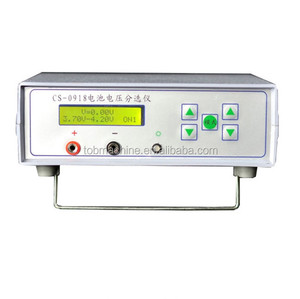
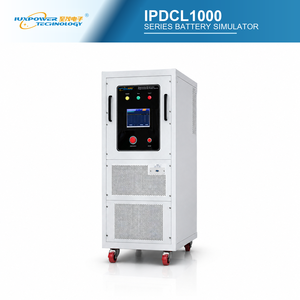
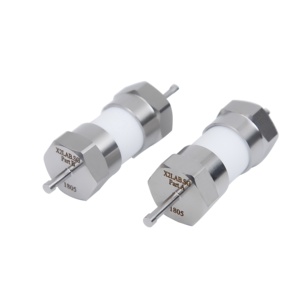
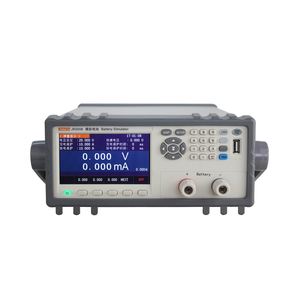
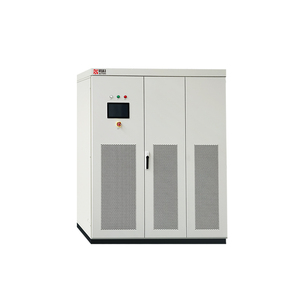
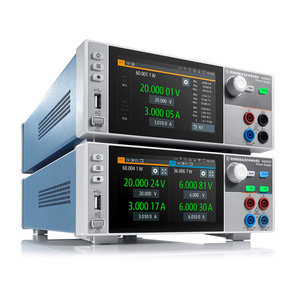
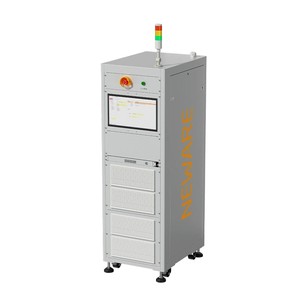
In modern power electronics R&D, electric vehicle powertrain testing, and semiconductor characterization, selecting the right DC electronic load manufacturer in China represents a pivotal engineering decision. Traditional pulse-width modulated (PWM) switching loads are frequently handicapped by high residual EMI noise, parasitic capacitance ringing, and slow dynamic transient loop response. For high-speed wide-bandgap (SiC and GaN) switching evaluation and precision battery cell degradation profiling, linear MOSFET electronic loads have emerged as the gold standard.
By operating power MOSFETs strictly within their Linear Active Region (Safe Operating Area - SOA), our custom-engineered linear DC electronic loads dissipate energy directly without high-frequency chopping. This delivers ultra-pure, low-noise current sinking with bandwidths extending up to several hundred kilohertz. When validating sensitive Battery Management Systems (BMS) or simulating micro-second load steps in aerospace power grids, linear MOSFET architectures eliminate false over-voltage trips caused by switching ripple artifacts.
Furthermore, robust active-current-sharing control circuits ensure that parallel-connected linear MOSFET channels remain thermally matched. Rather than subjecting localized silicone dies to thermal hot-spotting, our advanced power stage design balances drain current across hundreds of power MOSFET devices, dramatically boosting Mean Time Between Failures (MTBF) under continuous full-power thermal stress.
Zero high-frequency switching noise injection, ideal for low-noise battery cell simulation, fuel cell impedance spectroscopy, and automotive ECU testing.
Real-time microsecond-level hardware trip monitoring guards against junction over-temperature, over-voltage spikes, and reverse polarity connections.
Master-slave digital paralleling architecture enables seamless expansion from a 1.25 kW 1U bench instrument up to 10 MW liquid-cooled cabinet arrays.
Understanding the engineering trade-offs is crucial for test system integrators purchasing from top China suppliers.
| Performance Metric | Linear MOSFET Electronic Load | Switch-Mode (PWM) Electronic Load | Impact on Test Accuracy & Integrity |
|---|---|---|---|
| Ripple & Noise (20Hz–20MHz) | < 2 mVrms / 5 mArms | > 50 mVrms / 200 mArms | Eliminates measurement distortion in delicate battery sensing and BMS balance lines. |
| Transient Slew Rate (dI/dt) | Up to 50 A/µs (Microsecond response) | 0.5 to 5 A/µs (Bandwidth limited) | Accurately emulates dynamic motor drive transients and fast step-load pulses. |
| Operation Envelope | Continuous SOA Linear Mapping | Stepped Voltage/Current Boundary | Allows true low-voltage high-current sinking down to near-zero volt conditions. |
| EMC / EMI Profile | Class B / Industrial Laboratory Grade | Class A (Requires external bulky filters) | Prevents high-frequency radiation from corrupting adjacent DAQ channels. |
| Primary Application Suitability | BMS, Fuel Cells, Battery Cells, SiC/GaN DPT | Burn-in Racks, Solar Arrays, High-Power DC Power Supplies | Optimized for high-fidelity R&D lab measurements and automated production lines. |
The global transition toward electrification across automotive, renewable energy grid storage, and aerospace electrification has fundamentally altered the performance expectations for DC electronic load suppliers in China. As power density increases and wide-bandgap semiconductors reduce switching transition times to single-digit nanoseconds, test equipment must evolve concurrently. We identify three major technological trajectories defining the future of linear MOSFET electronic loads and battery simulators:
Historically, test engineers maintained separate programmable DC power supplies and passive electronic loads. Modern EV traction battery validation and hardware-in-the-loop (HIL) testing now demand unified Four-Quadrant Bidirectional Battery Simulators. Integrating a linear MOSFET current sink with a fast pulse-width modulated power source allows seamless, zero-crossover transition between charging and discharging phases. This capability is vital for assessing regenerative braking algorithms in hybrid-electric vehicles and thermal run-away protection strategies in modern BMS controllers.
As power requirements scale into the megawatt regime inside restricted laboratory floor spaces, conventional forced-air cooling methods reach acoustic and volumetric limits. Future procurement strategies lean heavily toward direct-to-plate micro-channel liquid cooling. By utilizing deionized water-glycol mixtures flowing through cold-forged copper heat sinks attached directly to power MOSFET substrates, thermal resistance $R_{th(j-c)}$ is reduced by over 60%. This permits up to 20 kW of continuous linear power dissipation per 3U chassis height while operating in absolute near-silence.
Battery Management Systems for 800V EV architectures require hundreds of battery cell simulators operating in series. Each individual cell channel must provide high galvanic isolation (up to 1500V DC breakdown rating), sub-millivolt accuracy, and active balance charge/discharge capability. Advanced Chinese manufacturers are standardizing on distributed digital signal processors (DSPs) embedded per multi-channel card, enabling automated open-circuit, short-circuit, and battery fault emulation over Ethernet/LXI or CAN FD interfaces.
When sourcing industrial test equipment from leading China MOSFET load suppliers, international procurement directors and test operations managers prioritize criteria that extend far beyond initial hardware purchase price. The total cost of ownership (TCO), long-term operational resilience, and software ecosystem compatibility dominate global procurement evaluations:
Leading tier-1 automotive and aerospace buyers mandate verified Component Bill of Materials (BOM). Premium Chinese suppliers now provide full component-level origin tracking, utilizing automotive-grade MOSFETs from international semiconductor fabs combined with internal precision magnetics manufacturing to eliminate supply chain disruptions.
Vendor lock-in is a primary pain point for ATE integration teams. Modern procurement specifies hardware platforms supporting standardized SCPI command structures over Ethernet/LXI, USB, and GPIB, accompanied by native LabVIEW, Python, MATLAB, and C# drivers to streamline test sequence development.
High-precision test equipment must maintain calibration standards over extended operating lifespans. Preferred suppliers provide factory-certified calibration reports accredited to ISO/IEC 17025, complemented by worldwide service centers and modular field-replaceable power sub-assemblies.
Leveraging decades of specialized power conversion engineering, vertically integrated manufacturing, and rigorous quality assurance protocols.
From precision CNC sheet-metal enclosure punching, automated surface-mount PCB assembly, to custom magnetic toroidal inductor winding—every critical assembly is produced under one roof to maintain complete quality control.
Every single electronic load and battery simulator undergoes 100% full-power burn-in at elevated ambient temperatures before factory shipment. Real-time telemetry logs thermal stability and dynamic drift to guarantee field reliability.
By standardizing on modular power blocks, unified firmware architectures, and maintaining pre-tested inventory modules, customized engineering configurations are built and dispatched within industry-leading delivery cycles.
Addressing the technical, operational, and commercial inquiries of international power systems engineers and procurement officers.
Whether you require a multi-channel BMS battery cell simulator, a low-noise linear MOSFET load for laboratory research, or a megawatt liquid-cooled testing matrix, our engineering specialists are ready to review your exact electrical specifications.