
As global energy architectures rapidly shift toward high-efficiency Direct Current (DC) transmission, specifying the right DC cabling infrastructure has become the single most critical factor in mitigating Levelized Cost of Energy (LCOE), reducing Balance of System (BOS) thermal losses, and ensuring 25-plus years of continuous operation under extreme environmental stress.
This technical whitepaper provides an exhaustive procurement evaluation for utility-scale solar developers, Engineering, Procurement, and Construction (EPC) firms, energy storage system (ESS) integrators, and industrial OEM buyers seeking qualified DC cable manufacturing partners in China. Operating as a premier Chinese DC cable manufacturer, our production ecosystem synthesizes Class 5 tinned flexible copper drawing, proprietary Electron-Beam (E-beam) irradiated Cross-linked Polyolefin (XLPO) insulation compounding, and automated online quality verification to deliver world-class DC wiring solutions engineered to exceed TÜV EN 50618, IEC 62930, and UL 4703 standards.
Explore our flagship Direct Current cable engineering series, meticulously manufactured for solar PV arrays, battery storage systems, EV charging infrastructures, and industrial DC power equipment.
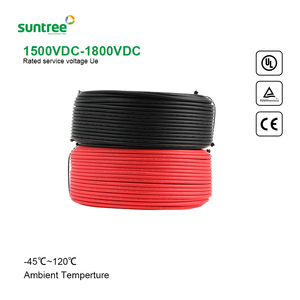
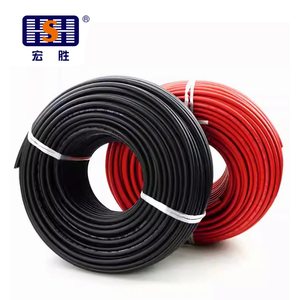
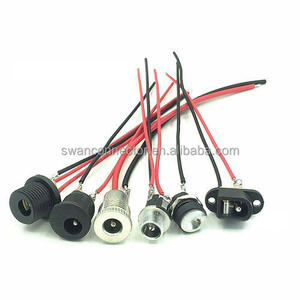
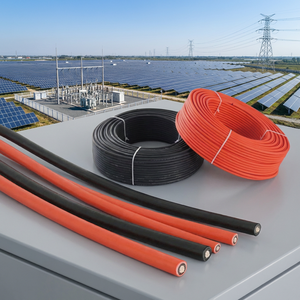
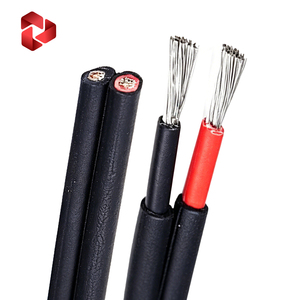
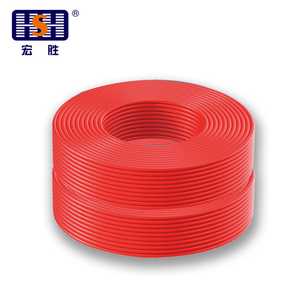
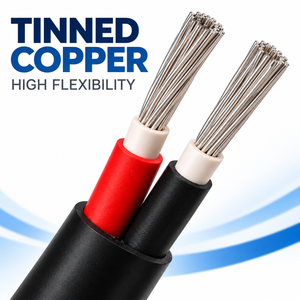
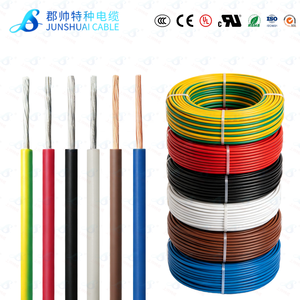
Direct Current applications present severe physical challenges distinct from conventional Alternating Current (AC) networks. Constant unidirectional electrical stress, combined with space charge accumulation within insulation layers, accelerated electrochemical degradation, and extreme thermal cycling, demands specialized raw material formulation and precise continuous manufacturing.
Uncoated bare copper wires in outdoor DC environments suffer rapid oxidation and galvanic corrosion due to atmospheric moisture and sulphur interaction. Our factory utilizes 99.99% ultra-pure electrolytic oxygen-free copper rods drawn into Class 5 fine multi-strand flexible conductors compliant with IEC 60228.
Each individual copper strand undergoes continuous electrolytic hot-dip tinning. The resulting protective tin layer forms a robust intermetallic barrier, preventing copper oxidation, maintaining low contact resistance across crimped solar connectors (MC4/EV terminals), and resisting atmospheric chemical attack over 25+ years.
Standard PVC or thermoplastic elastomers degrade under prolonged exposure to UV radiation and thermal stress above 70°C. We utilize customized Cross-Linked Polyolefin (XLPO) for both insulation and outer jacketing, processed through high-energy Electron-Beam (E-Beam) accelerators.
The irradiation process transforms the linear molecular structure of polyolefin into a 3D cross-linked matrix. This provides superior resistance to thermal deformation (up to 120°C continuous, 250°C short-circuit), immunity to environmental stress cracking, extreme hydrolytic stability (AD8 water submersion), and total flame retardancy without emitting toxic halogens.
Selecting the appropriate international standard for utility-scale solar and industrial DC power infrastructure is crucial for regional grid grid-code compliance and asset bankability.
| Engineering Metric | Legacy PV1-F (2PfG 1169) | Modern H1Z2Z2-K (EN 50618) | North American UL 4703 |
|---|---|---|---|
| Rated Voltage (U0/U) | DC 1000V / AC 0.6/1kV | DC 1500V / AC 1.0/1.0kV | DC 600V / 1000V / 2000V |
| Max Permissible DC Voltage | 1.8kV DC (Conductor-to-Earth) | 1.8kV DC Continuous | Up to 2.4kV DC peak |
| Insulation / Sheath Material | Cross-linked compound | Dual XLPO (Halogen-Free) | XLPE / EPR / Thermoset |
| Water Resistance Rating | Standard Moisture Test | AD8 Water Submersion Test | Wet Insulation Resistance (UL 44) |
| Direct Burial Capability | Not Recommended | Passed Impact & Crushing Tests | Optional "Direct Burial" Rating |
| Expected Service Life | 20 Years | 25 Years at 90°C Continuous | 25+ Years |
The global transition toward higher system efficiencies is dramatically reshaping the engineering parameters of Direct Current cabling systems. Procurement leads and systems architects must evaluate current cable specifications against emerging technology shifts:
Utility solar developers are rapidly abandoning legacy 1000V designs in favor of 1500V DC and 2000V DC architectures. Raising string voltage reduces operating current, enabling longer string lengths, fewer combiner boxes, smaller cable cross-sections, and up to 40% reduction in overall copper usage and transmission losses.
Battery Energy Storage Systems (BESS) require heavy-gauge, ultra-flexible DC power interconnects (up to 300mm² or 500 Kcmil) capable of absorbing massive dynamic short-circuit fault currents while resisting electrolyte chemical exposure and maintaining flame retardancy under UL 94 V-0 and CPR Euroclass ratings.
Leading international buyers now require full supply-chain transparency, ISO 14064 carbon accounting, and compliance with EU RoHS/REACH standards. Low-Smoke Zero-Halogen (LSZH) construction is mandated to prevent toxic halide gas release during combustion in dense urban installations.
As a leading Chinese DC cable factory, our manufacturing plant incorporates end-to-end vertical integration—from raw material incoming inspection to computerized high-voltage final testing.
Every meter of DC cable produced on our high-speed extrusion lines undergoes continuous multi-stage physical and electrical verification:
Addressing the core technical inquiries raised by global procurement engineers, project developers, and quality control inspectors.