
China Best Cell Simulator Suppliers & Exporter

High-Precision Programmable Battery Cell Simulators, Multi-Channel BMS Testing Platforms & Industrial DC Power Solutions

Direct Manufacturing & Global Export

Featured Battery Cell Simulators & Testing Platforms

Explore our industrial-grade cell emulation hardware tailored for BMS hardware-in-the-loop (HIL) testing, coin cell characterization, and high-dynamic electric vehicle pack validation.
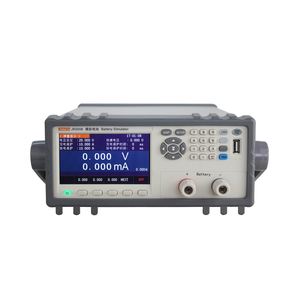
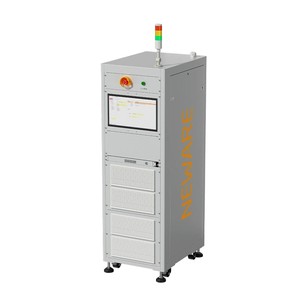
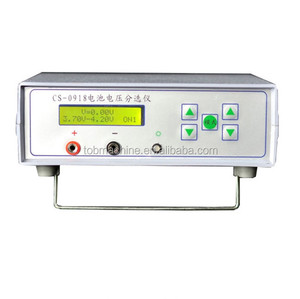
Lithium Ion Battery Voltage Current Capacity Tester

Lithium Ion Battery Voltage Current Capacity Tester

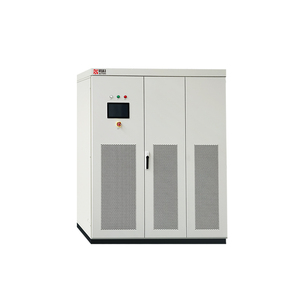
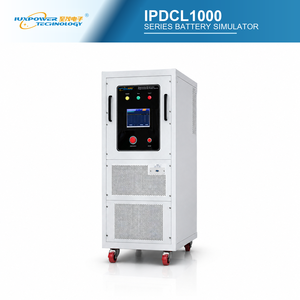
IPDCL1000 Series 220V 1KW High-Precision Battery Simulator

IPDCL1000 Series 220V 1KW High-Precision Battery Simulator Constant Power Testing Equipment

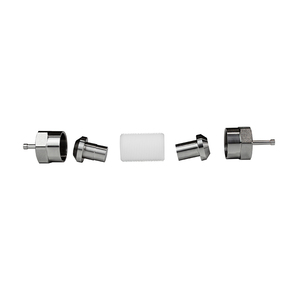
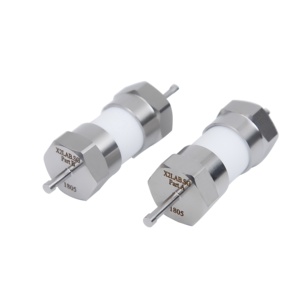
Removable Coin Battery Simulator

Removable Coin Battery Simulator for Coin Battery Test Coin Cells Simulator

JK5506 Battery Simulator

JK5506 Industrial Programmable Multi-Channel Battery Simulator

Power Aikesaibo ABS High-precision Battery Simulator 150-1000KW

Power Aikesaibo ABS High-Precision Dynamic Battery Simulator 150-1000KW

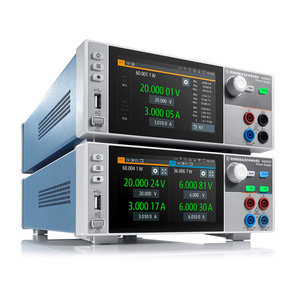
Rohde & Schwarz NGM201-NGM202 Industrial Bipolar Battery Simulator

Rohde & Schwarz NGM201-NGM202 Industrial DC Power Bipolar Battery Simulator

Coin Cell Simulator CR2032 CR2016

Coin Cell Simulator Battery Simulator for CR2032/2016 Electrochemical Laboratories

24-Channel Battery Cell Simulator for BMS Validation

24-Channel Battery Cell Simulator for BMS Validation & SOC Balance Strategy

±0.02%

Voltage Accuracy

<100μs

Transient Response Time

128Ch

Modular Stackability

1000V

Isolation Rating

Industry White Paper & Sourcing Benchmark

Engineering Principles of Battery Cell Emulation

Why standard programmable DC power supplies fail in modern BMS verification, and how dedicated high-dynamic cell simulators bridge the validation gap.

In the rapidly expanding electr­ification landscape—spanning Electric Vehicles (EV), Grid-scale Energy Storage Systems (ESS), Medical Devices, and Wearable Electronics—the accurate testing of Battery Management Systems (BMS) is paramount. Traditional programmable DC power supplies are designed to provide stable voltage or current output under steady-state conditions. However, when deployed to emulate individual electrochemical cells within a series-connected battery pack, standard supplies reveal critical physical limitations:

  • Unidirectional Current Flow: Standard power supplies can only source current. They cannot sink current during passive or active cell balancing tests without triggering over-voltage protection or damaging output stages.
  • Slow Dynamic Transient Response: Standard power supplies typically feature transient recovery times in the range of milliseconds to tens of milliseconds. A lithium-ion cell, conversely, reacts instantly to load changes. Modern BMS algorithms require sub-millisecond dynamic response to evaluate SOC (State of Charge) and SOH (State of Health) estimation accuracy under rapid pulse load changes.
  • Lack of Variable Internal Resistance ($R_{int}$) Emulation: A physical battery cell exhibits fluctuating internal resistance dependent on temperature, SOC, and aging history. Standard power supplies maintain a fixed zero or near-zero output impedance.

High-precision Battery Cell Simulators overcome these bottlenecks by integrating high-speed bidirectional power stages, programmable output impedance, and ultra-high galvanic isolation between channels. As a leading China exporter and original equipment manufacturer (OEM), our cell simulation architectures deliver 4-quadrant dynamic operation capable of switching between sourcing and sinking seamlessly within 100 microseconds.

Manufacturing Leadership

Why Top Global OEM R&D Teams Partner With Us

From PCB surface-mount assembly to full-power burn-in validation, our vertically integrated manufacturing facility in China ensures strict compliance with ISO 9001 and international quality standards.

Current-Fed Topology & Microsecond Sinking

Our proprietary current-fed power conversion architecture utilizes inductive energy storage rather than massive capacitive banks. This guarantees dynamic transient responses under 100μs and inherently limits fault currents during intentional BMS short-circuit validation.

1000V Channel-to-Channel Galvanic Isolation

To simulate high-voltage battery strings (up to 800V/1000V EV architectures), each individual cell channel features high-dielectric galvanic isolation. Test 24, 48, or 128 channels stacked in series without ground loop risks or noise interference.

Programmable Internal Resistance ($R_{int}$)

Real-time programmable impedance allows engineers to accurately emulate degradation (SOH decay), thermal runaway preconditions, and cold-cranking voltage drop curves in coin cell, prismatic, cylindrical, and pouch cells.

Product Engineering Matrix

Technical Comparison of Cell Simulator Categories

Select the ideal simulator architecture based on voltage output, dynamic response speed, channel density, and target application requirements.

Simulator Category Voltage Range Current Source / Sink Dynamic Response Primary Use Case
Coin Cell Simulator 0 – 6 V DC ±1A / ±3A per Ch < 50 μs CR2032/2016 wearability test, IoT energy harvesting, electrochemical research.
Multi-Channel BMS HIL Simulator 0 – 5 V / 0 – 10 V DC ±5A / ±10A per Ch < 100 μs BMS ECU algorithm verification, passive/active cell balancing, SOC/SOH tuning.
High-Precision Power Simulator 0 – 60 V / 0 – 300 V DC ±50A to ±300A < 1 ms Module-level battery pack testing, low-voltage EV powertrain, drone battery emulation.
Megawatt Regenerative Simulator 150 V – 1000 V DC Up to ±1000 kW < 5 ms Full EV traction pack emulation, microgrid testing, hydrogen fuel cell stack simulation.
Strategic Sourcing Insights

Future Procurement & Technology Trends in Cell Emulation

Market developments driving next-generation battery test hardware procurement across global R&D laboratories.

1. Wide-Bandgap (SiC & GaN) Integration

Silicon Carbide (SiC) power switching elements are replacing silicon MOSFETs in simulator power stages, driving conversion efficiency above 95% while dramatically reducing thermal dissipation footprint in testing racks.

2. Hardware-in-the-Loop (HIL) Co-Simulation

Modern automated test environments require real-time SCPI, CAN-FD, and Ethernet/LXI communication protocols, enabling direct connection with dSPACE, NI VeriStand, and MATLAB/Simulink digital twin models.

3. Sodium-Ion & Solid-State Curves

As chemistry shifts beyond LiFePO4 (LFP) and NMC toward Sodium-Ion and Solid-State batteries, programmable software interfaces must emulate non-linear hysteresis voltage curves with sub-millivolt accuracy.

4. Comprehensive Fault Injection

Automotive safety standards (ISO 26262 ASIL-D) demand hardware capable of simulating wire breaks, reversed polarity, inter-cell short circuits, and localized over-temperature signals in a controlled, repeatable manner.

Technical Sourcing Support

Frequently Asked Sourcing & Technical Questions

Expert clarity on ordering, custom specifications, international compliance, and system integration.

What is the primary technical difference between a Cell Simulator and a standard DC Power Supply?
A dedicated battery cell simulator features 4-quadrant bidirectional operation (allowing it to seamlessly switch between sourcing and sinking current to test BMS balancing circuits), microsecond dynamic response speed (<100μs), programmable internal resistance ($R_{int}$), and multi-channel high galvanic isolation (>1000V DC). Standard DC power supplies are typically unidirectional, have slow transient response times (>10ms), zero variable impedance control, and common ground limitations.
How does a multi-channel cell simulator handle BMS balancing strategy testing?
During passive balancing testing, the simulator sinks the energy discharged by the BMS bleeding resistor without letting channel voltage rise unexpectedly. During active balancing testing, adjacent channels dynamically source and sink current simultaneously, allowing test engineers to verify energy transfer efficiency, algorithm convergence, and thermal management strategies across the BMS board.
What remote control APIs and communication protocols are supported for automated test equipment (ATE)?
Our cell simulators ship standard with Ethernet/LXI, USB, and CAN-FD interfaces, alongside isolated analog I/O. Standard SCPI command sets are fully supported, along with native IVI drivers, LabVIEW VIs, and open-source Python libraries. This enables rapid integration into dSPACE, NI PXI, Chroma, or custom C++/Python ATE software frameworks.
Can your cell simulators emulate extreme fault conditions like cell reverse polarity or short circuit?
Yes. Built-in programmable fault injection relays allow hardware-level simulation of open-circuit (wire disconnect), short-circuit between adjacent cells, pin-to-ground leakage, over-voltage, under-voltage, and cell reverse polarity. These features are vital for achieving ISO 26262 ASIL-D functional safety compliance testing for automotive BMS units.
What lead times and shipping terms are standard for export from China?
Standard modular configurations (e.g., 6-channel to 24-channel benchtop units) typically carry a 2 to 4-week manufacturing lead time. Custom high-power megawatt cabinet systems require 4 to 6 weeks. We support EXW, FOB, CIF, and DDP export terms, shipping globally with ISO 9001 factory calibration certificates traceable to NIST/NIM standards.
Is post-sales technical support and calibration service available internationally?
Yes. Every cell simulator is backed by a standard 2-year factory warranty. We offer remote engineering diagnostic assistance, firmware updates, and comprehensive calibration documentation. Field service and spare module swap-out programs are coordinated via our global distribution partners across North America, Europe, and Asia-Pacific.
Custom OEM & Export Solutions

Need a Tailored Cell Simulator Architecture?

Speak directly with our senior power electronics application engineers to review your channel counts, voltage/current envelopes, dynamic response targets, and custom interface requirements.