
Engineered for rigorous testing of EV powertrain components, BMS balance strategies, electrochemical cells, and high-voltage DC buses. Fully CE-certified with low noise, ultra-fast dynamic response, and seamless SCPI automation.
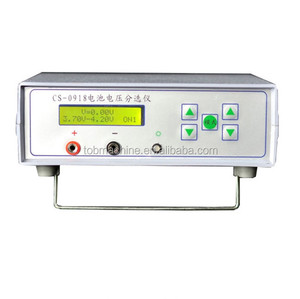
Automated multi-channel charge/discharge analyzer providing precise Ah/Wh capacity determination, internal resistance spectroscopy, and automated life-cycle degradation profiling.
Get Catalog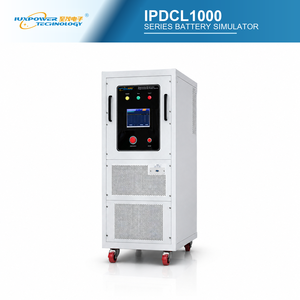
Fast-transient DC source-sink simulator featuring programmable constant power curves, millivolt-level output resolution, and real-time battery charge/discharge curve emulation.
Get Catalog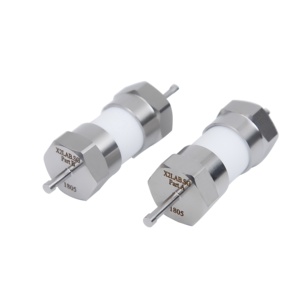
Modular, micro-amp level resolution cell emulator tailored for ultra-low-power IoT device validation, wearable electronic testing, and coin-cell chemistry modeling.
Get Catalog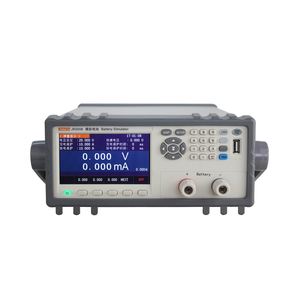
Multi-channel high-speed battery pack simulator featuring isolated output channels, high-frequency sampling, and dynamic load step response under 100 microseconds.
Get Catalog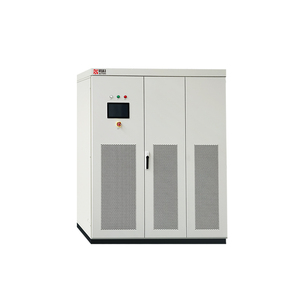
Heavy-duty industrial megawatt-class regenerative battery emulator designed for EV traction motor drive testing, micro-grid ESS verification, and high-power DC bus emulation.
Get Catalog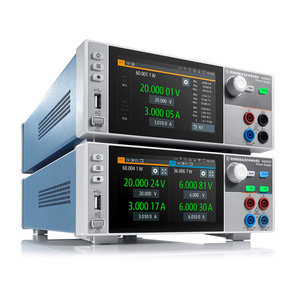
Precision two-quadrant bipolar power supply capable of seamless source-to-sink transitions, minimal output ripple, and sub-nanometer current measurement sensitivity.
Get Catalog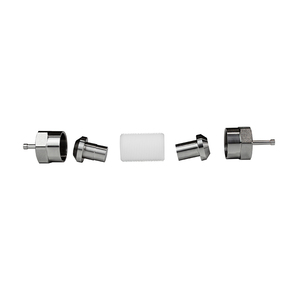
Laboratory-grade electrochemical impedance test fixture tailored specifically for CR2032, CR2016, and solid-state coin cell research with active temperature compensation.
Get Catalog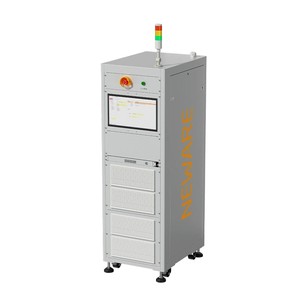
High-density channel array system engineered for Hardware-in-the-Loop (HIL) BMS algorithm verification, fault injection testing, and cell balancing efficiency profiling.
Get CatalogWhy modern automotive, aerospace, and renewable test benches are abandoning legacy voltage-fed systems in favor of robust current-fed programmable power processing.
Traditional switch-mode DC power supplies utilize high-capacitance output filters directly across the DC voltage bus (voltage-fed topology). While simple to construct, this design exhibits severe failure modes when exposed to inductive loads, rapid short circuits, or dynamic regenerative EMF from electric motors and high-capacity battery packs.
As an industry-leading CE certified programmable power manufacturer, our engineering architecture centers around a current-fed converter power processing stage. In this topology, an energy-storage inductor precedes the primary switching bridge, effectively decoupling the AC mains line from transient load spikes.
“Current-fed topologies inherently limit instantaneous short-circuit currents to safe operating levels without relying solely on software-driven protection trips, guaranteeing survival under severe arcing and plasma discharge conditions.”
By placing inductive storage at the heart of the power stage, output capacitance is reduced by up to 80%. This reduction yields dramatic benefits for test automated equipment (ATE): faster voltage slew rates, minimal stored energy during fault conditions, and unyielding current regulation into zero-ohm loads.
Selecting the optimal DC power processing engine requires analyzing physical conversion characteristics under real-world testing environments:
| Architecture Metric | Current-Fed Topology (Our Factory Standard) | Legacy Voltage-Fed Topology | Impact on Testing Reliability |
|---|---|---|---|
| DC Bus Energy Storage | Inductive Storage (High Inductance L-Stage) | Capacitive Storage (High Capacitance C-Stage) | 80% lower discharge energy during load faults |
| Short-Circuit Protection | Inherent Physical Current Limitation | Electronic Shutdown Trip (Microsecond Delay) | Zero component degradation on continuous dead shorts |
| Slew Rate Capability | Ultra-Fast (> 2.5 V/μs programmable) | Bandwidth-Limited by Large Output Capacitors | Enables precise double-pulse automotive testing |
| Reactive Load Stability | Infallible Constant-Current Tracking | Susceptible to Feedback Loop Oscillation | Ideal for particle magnets and plasma arc loads |
| CE EMC Compliance | Class A / Class B Radiated Immunity (EN 61000) | Requires Heavy External Noise Filters | Seamless integration into international R&D bays |
True engineering authority stems from end-to-end control of every sub-assembly: from magnetic transformer winding to real-time full-load burn-in validation.
Transformer saturation and thermal breakdown are the leading causes of high-power failure. Our factory winds custom planar transformers and inductors under strict ISO 9001:2015 controls, using vacuum impregnation and Class-H insulation to guarantee continuous megawatt operation.
Every programmable power system leaving our facility carries certified CE conformity, verified through rigorous testing protocols under Low Voltage Directive (LVD 2014/35/EU) and Electromagnetic Compatibility Directive (EMC 2014/30/EU), including IEC/EN 61010-1 standard validation.
Before shipment, every rack-mount DC supply and battery simulator undergoes 48+ hours of full-load thermal burn-in under worst-case ambient temperature profiles. Infrared thermography checks ensure zero hot-spot variance across internal MOSFET stages.
Factory Procurement Assurance: Standard made-to-order manufacturing cycles range from 4 to 6 weeks, backed by direct factory engineering consultation, stocked modular spare sub-assemblies, and localized technical service hubs globally.
An executive overview of dynamic shifts reshaping power electronics procurement through 2035—driven by SiC/GaN semiconductors, high-voltage EV architectures, and smart micro-grids.
The global automotive transition from 400V to 800V/1200V battery architectures is mandating high-voltage test equipment capable of generating clean DC buses up to 1500 VDC. Furthermore, the adoption of Silicon Carbide (SiC) and Gallium Nitride (GaN) switching components creates extreme dV/dt slew rates that conventional power supplies cannot evaluate without false trips.
Procurement teams must prioritize programmable DC power supplies equipped with low-inductance internal buses and integrated fast-slew-rate control stages to perform valid double-pulse tests without introducing parasitic ringing.
Battery Management System (BMS) testing is evolving from macro-level pack cycling to high-density cell-level emulation. Modern cell simulators must provide 24 to 96 isolated channels within a single chassis, allowing engineers to simulate individual cell SOC drift, internal impedance spikes, open-circuit fault conditions, and thermal runaway thresholds in real time.
Industrial energy efficiency regulations (ISO 50001) are rendering traditional resistive-dissipation power loads obsolete. Future procurement mandates specify bidirectional regenerative power supplies capable of acting as both a DC source and a line-synchronized grid load.
By returning over 96% of absorbed power back to the local AC facility grid, enterprise test facilities reduce HVAC thermal loads, cut utility overhead, and achieve carbon neutral certification goals.
In-depth answers to critical technical, compliance, and custom engineering queries submitted by overseas procurement managers and system integrators.
Four decades of continuous power engineering evolution, robust current-fed designs, and complete design-to-build vertical integration under one roof.
By executing sheet metal fabrication, magnetics winding, Surface Mount Technology (SMT) board assembly, and final integration under a single quality control system, we eliminate supply chain bottlenecks and guarantee long-term component traceability.
Command sets, firmware protocols, user interface layouts, and isolated analog pinouts are standardized across all series—from 1U rack-mount units to multi-megawatt floor cabinets—allowing seamless scalability without software rewrites.
Direct factory engineering consultation is complemented by authorized global calibration, service, and technical support centers across North America, Europe, the United Kingdom, Asia-Pacific, and Australia.
Whether you require a standard CE-certified 1U rack-mount programmable supply or a customized multi-megawatt battery emulation test bay, our application engineering team is ready to evaluate your specifications.