
Direct factory supply featuring robust current-fed topologies, ultra-fast dynamic response, and programmable multi-channel power simulation.
An authoritative technical analysis of current-fed topologies, power density optimization, and industrial electromagnetic compatibility compliance for global markets.
Unlike conventional voltage-fed power supplies that rely heavily on large capacitive filter banks across the output stage, modern industrial power racks utilize advanced current-fed power processing topologies. By storing energy inductively on the internal DC bus, the power supply gains inherent short-circuit immunity and rugged thermal tolerance. In the event of a sudden short-circuit or reactive load transient, the inductive storage limits the rate of current rise ($\text{d}i/\text{d}t$), safeguarding both internal power semiconductors (IGBTs/SiC MOSFETs) and downstream Device Under Test (DUT) hardware.
European market insertion demands rigid conformity to international standards. Certified power rack architectures strictly align with the Low Voltage Directive (2014/35/EU) and the EMC Directive (2014/30/EU) under EN 61010-1 and EN 61000-6-2/4 frameworks. Multi-stage industrial EMI filters are integrated directly into the AC line input stage to suppress conducted and radiated emissions. This ensures seamless operation alongside sensitive metrology instruments, ATE test bays, and automated PLC control systems without introducing phase distortion or ground loops.
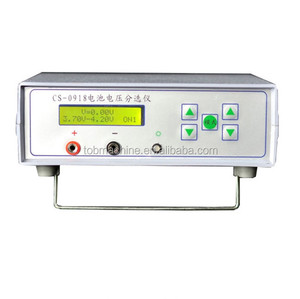
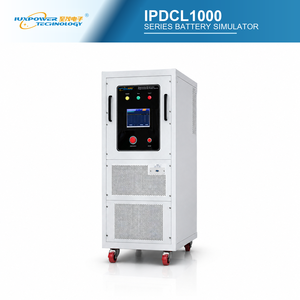
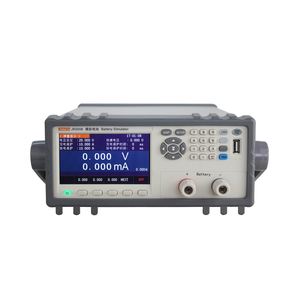
In the domain of electric vehicle (EV) powertrain verification, energy storage system (ESS) integration, and microgrid research, fixed DC power sources fail to capture real-world chemical battery dynamics. Advanced CE-certified battery simulators bridge this gap by offering programmable internal resistance ($R_i$), continuous state-of-charge ($\text{SOC}$) tracking, and sub-millisecond dynamic step responses.
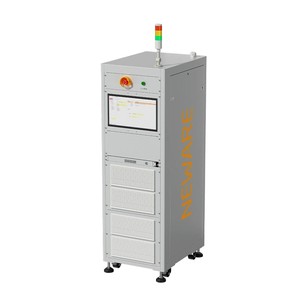
When evaluating Battery Management Systems (BMS), test engineers require sub-millivolt cell voltage accuracy combined with multi-channel galvanic isolation. Modern multi-channel cell simulators allow independent control of 24 to 96 series-connected simulated lithium cells. Each channel can sink or source current to validate balance routing algorithms, over-voltage/under-voltage trip points, and fault-diagnostic protocols under precise thermal profiles.
Strategic shift toward wide-bandgap test automation, high-power water cooling, and automated SCPI/LXI orchestration in enterprise test facilities.
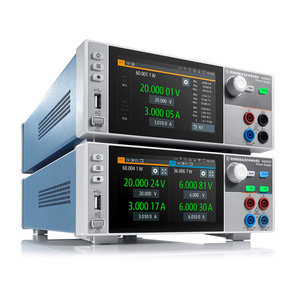
Global test facilities are shifting toward power supplies engineered around Silicon Carbide (SiC) and Gallium Nitride (GaN) power stages. Switching frequencies exceeding 100 kHz drastically reduce magnetics footprint while achieving system efficiencies over 95.5%, resulting in smaller 1U and 2U rack footprints.
For installations scaling from 500 kW to 10 MW—such as wind tunnel arc-heaters, industrial electrolyzers, and mega-watt EV charging stations—air cooling reaches thermal limits. Closed-loop water cooling eliminates high acoustic noise, prevents facility HVAC overload, and allows IP54-sealed rack designs.
Hardware procurement is now strictly tied to digital ecosystem compatibility. International buyers mandate standardized IVI-COM drivers, Native Python SDKs, and LXI Class C Ethernet control to integrate power racks into automated cloud-monitored CI/CD hardware testing pipelines.
Comparative parameter matrix across standardized rack-mount power architectures and battery simulators for engineering evaluation.
| Series Platform | Power Range | Form Factor | Cooling Tech | Primary Application | Certification |
|---|---|---|---|---|---|
| SLx / SL Series | 1.5 kW – 10 kW | 1U Rack-Mount | Forced Air | ATE Bench Testing, SiC/GaN Double Pulse | CE / UL Compliant |
| XR Series | 2 kW – 10 kW | 2U Rack-Mount | Forced Air | High Voltage DC Bus, Solar Inverter Emulation | CE / UL Compliant |
| TS Series | 5 kW – 100 kW | 3U – 16U Rack | Air / Ducted | EV Traction Inverter, Battery Pack Testing | CE Certified |
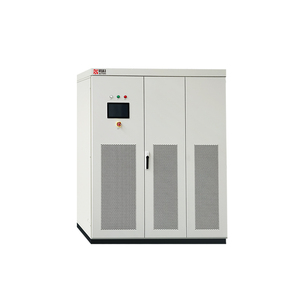
| MT Series | 150 kW – 3 MW | Industrial Cabinet | Heavy Forced Air | Plasma Arc, Hypersonic Wind Tunnels | CE Certified |
| ML Series | 500 kW – 10 MW+ | Modular Rack Array | Liquid / Water-Cooled | Continuous Megawatt Duty, Electrolysis | CE Certified |
| BMS-24 Sim Series | Multi-Channel Cell | 3U Custom Chassis | Precision Air | BMS Balancing, Cell SOC Strategy Test | CE Certified |
Vertically integrated production capabilities ensure strict quality control, repeatable performance, and long-term spare-parts availability.
From precision CNC sheet-metal punching and automated magnetics winding to surface-mount PCB assembly and final sub-assembly wiring, manufacturing operations are concentrated under strict ISO 9001 supervision. Eliminating third-party sub-contracting risks ensures tight tolerance control, reliable delivery schedules, and rapid customization turnarounds.
Every single power rack and battery simulator undergoes rigorous multi-hour full-power thermal burn-in prior to packaging. Comprehensive factory calibration reports are supplied with each instrument, guaranteeing that output voltage, current, and regulation specs conform to published micro-amp and micro-volt resolution levels.
With extensive experience exporting to over 60 countries across Europe, Asia-Pacific, North America, and the Middle East, our logistics team handles export documentation, ISPM 15 compliant heat-treated wooden packaging, customs HS code alignment (850440), and worldwide door-to-door freight forwarding seamlessly.
System power can be scaled effortlessly in the field using our dedicated digital interface bus. Connect up to 10 units in parallel or series under a single master controller. The system automatically balances current output without needing complicated external summing networks or software re-configurations.
Detailed answers regarding CE certification standards, custom rack engineering, export packaging, and technical support.
Whether you require a custom multi-channel BMS battery cell simulator, a 1U high-density DC power rack, or a megawatt liquid-cooled testing system, our engineering specialists will verify your dynamic specifications and issue a competitive export proposal within 24 hours.