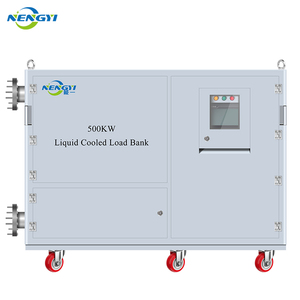

Explore our certified portfolio of resistive, inductive, reactive, liquid-cooled, and high-voltage containerized load banks designed for continuous full-capacity power validation.

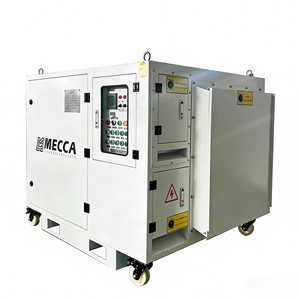
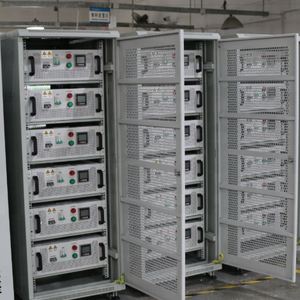
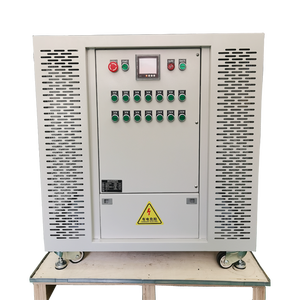
A technical white paper on high-power load bank design, thermal dissipation physics, and regulatory compliance for mission-critical electrical commissioning.
In electrical power infrastructure—spanning hyperscale data centers, utility-grade microgrids, and naval propulsion systems—performing full-capacity verification under realistic electrical stress is non-negotiable. As a premier CE Certified Load Bank Manufacturer & Exporter, our engineering core focuses on delivering precise, dynamic, and thermally stable load profiles that reproduce exact field operating conditions without thermal runaway or resistance drift.
Traditional lower-tier load banks rely on basic resistance wire wrapped around ceramic cores, leading to excessive thermal expansion, significant degradation of resistance over continuous operation, and uncontrolled inductive reactance spikes during step-loading. Our advanced power testing systems utilize proprietary Chromium-Nickel Alloy (NiCr) resistor elements housed inside corrosion-resistant 316 stainless steel sheathings. These elements exhibit an exceptionally low temperature coefficient of resistance ($\le 0.00015 / ^\circ\text{C}$), ensuring that electrical load step changes maintain $\pm 0.5\%$ accuracy from initial cold-start through extended 72-hour full-power endurance runs.
Technical Information Gain Insight: Unlike standard voltage-fed resistor banks that suffer from heat-induced power drop-off (where output power degrades by up to 12% as temperatures reach peak operating levels), our current-calibrated alloy arrays maintain true rated power absorption even when ambient internal enclosure temperatures exceed $350^\circ\text{C}$.
Choosing the correct load bank architecture depends entirely on the device under test (DUT)—whether it is a diesel backup generator set, an uninterruptible power supply (UPS), a solar central inverter, or an industrial gas turbine.
Designed to apply 100% real power load onto prime movers and electrical generators. Resistive load testing strips away carbon deposits ("wet stacking") in diesel engine cylinders by forcing internal engine combustion pressures and temperatures to peak efficiency levels.
Industrial power systems operating motors, transformers, and inductive equipment require reactive power ($\text{kVAR}$) alongside active power ($\text{kW}$). Our combined R-L load banks integrate high-Q, vacuum-impregnated inductive reactors alongside non-inductive resistor banks. This allows exact simulation of standard commercial power factor load profiles ($\cos\phi = 0.8$), evaluating full generator voltage regulation, automatic voltage regulator (AVR) response, and alternator thermal dissipation capabilities.
With AI supercomputing clusters driving rack power densities past 100kW per cabinet, traditional forced-air load banks create untenable ambient heat loads inside test environments. Our 550KW Liquid Cooled Load Bank platform utilizes closed-loop water-glycol heat exchangers coupled directly to high-flux liquid cooling cold plates. Liquid cooling enables a 70% reduction in physical footprint while capturing over 95% of generated thermal energy in the fluid loop for controlled external rejection or waste-heat energy recovery.
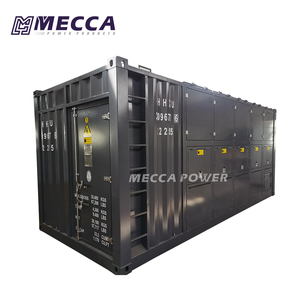
Direct testing of medium-voltage generators and grid distribution nodes eliminates the requirement for heavy step-down transformers. Available in 20ft and 40ft ISO container configurations, these units incorporate internal high-voltage switchgear, vacuum circuit breakers, multi-stage forced air cooling, and integrated fire suppression compliant with NFPA 850 standards.
Architectural overview comparing structural, thermal, and electrical capabilities across our primary CE certified export platforms.
| Platform Category | Power Range | Voltage Envelope | Cooling Architecture | Control Topology | Primary Application |
|---|---|---|---|---|---|
| Liquid Cooled (3P4W) | 100kW – 2MW | 380V – 690V AC | Closed-Loop Water/Glycol | PLC / Modbus TCP / Touchscreen | Data Center Liquid Cooling Loops & Marine Test Benches |
| Containerized MV/HV | 1MW – 10MW+ | 6.6kV – 20kV AC | High-Velocity Axial Forced Air | Fiber-Optic PC Remote Control | Power Grid Substation & Large Genset Commissioning |
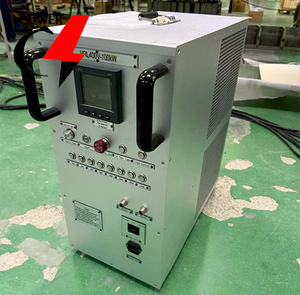
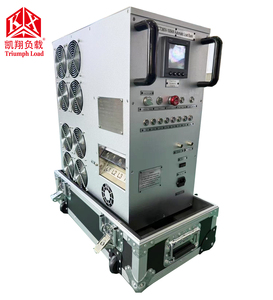
| Portable AC Resistive | 10kW – 300kW | 110V – 480V AC | Forced Air (Horizontal/Vertical) | Manual Step / Auto Digital Microprocessor | Field Service, Generator Repair & Rental Fleets |
| Rack-Mounted Intelligent | 3kW – 20kW / Unit | 120V – 415V AC / DC | Internal Variable Speed Fans | SNMP / RS-485 / Web GUI Interface | Server Room Hot/Cold Aisle Commissioning & UPS Testing |
| Custom R-L-C Reactive | 500kW – 5MW | 380V – 13.8kV AC | Ducted Forced Industrial Air | SCPI / LabVIEW / PC Automation | Turbine Testing, Microgrid & Solar Inverter Validation |
Combining vertical manufacturing integration, rigorous CE engineering compliance, and worldwide turnkey exporter capabilities.
From sheet metal laser cutting, CNC bending, and powder coating to custom magnetic reactor winding and SMT control circuit assembly—every stage is executed inside our ISO-certified facilities. This vertical model eliminates supply chain latency and delivers custom tailored build times in 4 to 6 weeks.
Every exported unit carries full CE Certification, adhering strictly to Low Voltage Directive (LVD 2014/35/EU), Electromagnetic Compatibility (EMC 2014/30/EU), and EN 61010-1 electrical safety standards. Units feature multi-tier protection including phase reversal sensing, fan lockouts, and over-temperature isolators.
Powered by our proprietary digital processing platform, our load banks support microsecond step-loading, power transient captures, and programmable SCPI / Modbus automation. Integrated software enables multi-unit master-slave paralleling up to 50MW under a single control dashboard.
Market intelligence and technological foresight for engineering directors, procurement officers, and power plant commissioning experts.
As AI infrastructure transitions data center racks from air-cooled architectures to direct-to-chip liquid cooling and immersion cooling, the traditional methods of testing rack-level power distribution units (PDUs) and backup UPS arrays must evolve. Procurement data indicates a massive surge in demand for Liquid Cooled Load Banks. Future-proof testing facilities are opting for fluid-based heat transfer systems that connect directly to facility primary cooling loops (CDUs), avoiding thermal saturation of white space environments and reducing test bay HVAC electrical loads by up to 80%.
Modern power grids no longer rely solely on centralized thermal plants; the rapid proliferation of solar PV farms, battery energy storage systems (BESS), and wind turbines demands load testing equipment capable of dynamic, non-linear load profile execution. Next-generation load banks are transitioning from simple static step loads to real-time microgrid simulators. Incorporating high-speed Modbus TCP, Ethernet/IP, and IEC 61850 communication protocols, procurement teams are selecting load banks that stream high-frequency harmonic, voltage sag, and power factor data directly to enterprise Digital Twin platforms for predictive analysis.
Historical power plant commissioning required connecting low-voltage load banks through massive step-down transformers to test 10.5kV or 13.8kV utility generators. This introduced significant inductive losses, phase angle distortion, and costly logistics. Global procurement trends show a decisive move toward Direct High Voltage Containerized Load Banks (10.5kV to 20kV). By eliminating auxiliary transformers, engineering firms achieve cleaner power measurements, cut site mobilization costs by 40%, and streamline overall equipment footprint.
Flexibility is paramount for equipment rental operators and hyperscale developers. Purchasing fixed megawatt single-block units limits operational adaptability. Modern procurement strategy emphasizes purchasing standardized, modular 500kW to 1200kW load bank modules equipped with automatic master-slave detection. A operator can deploy individual 500kW units for localized UPS testing or stack 20 modules in parallel via high-speed optical daisy chains to form a unified 10MW load testing matrix for utility grid compliance verification.
Expert answers addressing regulatory compliance, liquid cooling thermodynamics, custom ratings, and international shipping logistics.
CE Certification ensures that electrical testing equipment meets strict European Health, Safety, and Environmental protection standards under the Low Voltage Directive (LVD 2014/35/EU) and Electromagnetic Compatibility Directive (EMC 2014/30/EU). For global engineering contractors and equipment exporters, buying CE-certified load banks guarantees compliance with international electrical codes (such as IEC 61010-1 and IEC 60947), protects personnel against arc flash hazards, prevents electromagnetic interference with sensitive control systems, and facilitates smooth customs clearance across European, Middle Eastern, and Asian markets.
A traditional forced-air load bank uses high-cfm industrial fans to push ambient air across glowing resistor coils, expelling intense hot air into the surrounding environment. In contrast, a Liquid Cooled Load Bank dissipates electrical energy into a fluid medium (typically water or a water-glycol mixture) via closed-loop heat exchangers or direct liquid cold plates. Liquid cooling is dramatically more compact (up to 70% smaller physical footprint), operates with minimal acoustic noise (<65 dB vs >85 dB for forced air), and allows heat energy to be routed directly outside the building or recovered for facility heating, making it ideal for data center cleanrooms and marine engine rooms.
Our combined resistive-inductive (R-L) load banks are fully adjustable across a power factor range from 0.8 lagging to 1.0 (unity). Through digital PLC step controls or software commands, users can independently switch active power ($\text{kW}$) and reactive power ($\text{kVAR}$) steps. This allows full emulation of standard commercial motor loads ($\cos\phi = 0.8$), generator nameplate rating evaluations, transformer transient response checks, and severe lagging power factor stress tests required by ISO 8528-5 performance standards.
Yes. Our containerized high-voltage load banks (ranging from 1000kW to 6000kW+ per enclosure) are custom-engineered for harsh environment deployments. Options include marine-grade C5-M anti-corrosion painting, sand filtration inlet louvers for desert operations, internal space heaters for arctic anti-condensation protection, and heavy-duty ISO corner castings certified for offshore platform lifting. All medium/high voltage enclosures feature segregated low-voltage control compartments and automatic safety interlocks.
All modern PC-controlled and automated load banks come standard with Ethernet/LXI, USB, and RS-485 Modbus RTU interfaces, with optional Modbus TCP, SNMP for data center monitoring, and IEEE-488 (GPIB). Equipment includes native Windows-based control software for live graphing, automatic step-profile execution, transient data recording ($\text{V, A, Hz, kW, kVAR, PF}$), and automated PDF report generation compliant with ISO commissioning audit trails.
Because our manufacturing model utilizes vertically integrated component production—including in-house sheet metal fabrication, CNC machining, and magnetic core winding—our standard build cycle for custom-engineered load banks is 4 to 6 weeks. Standard portable models (50kW, 100kW, 200kW AC 380V/400V) are frequently maintained in ready-to-ship inventory for emergency project requirements.
Need precise technical sizing, custom voltage taps, liquid cooling flow calculations, or a formal commercial proposal for your project? Contact our engineering design group for immediate assistance.