CE Certified Export Compliance • ISO 9001:2015

CE Certified Dynamic Load Suppliers & Exporters

Industrial-Grade Programmable Electronic Loads & Precision Battery Simulators Engineered for Accelerated Life Testing, BMS Validation, and Next-Generation Power Electronics Sinking.

Precision Instrument Matrix

High-Dynamic Load & Battery Simulation Systems

Select from our standard CE-certified dynamic loads, bi-directional simulators, and multi-channel BMS testing platforms engineered for global export.
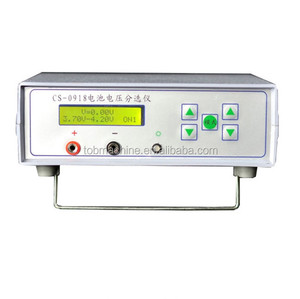
Lithium Ion Battery Voltage Current Capacity Tester

Lithium Ion Battery Voltage Current Capacity Tester

High-precision capacity analyzer with automated dynamic loading, voltage profile logging, and fast constant-current dynamic load cycling for lithium pack QA.
Multi-Range High Accuracy
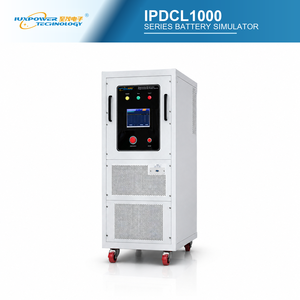
IPDCL1000 Series 220V 1KW Battery Simulator

IPDCL1000 Series 220V 1KW Battery Simulator

High-precision DC electronic load with constant power function, sub-millisecond dynamic response, and low-noise sinking architecture.
220V / 1KW Constant Power
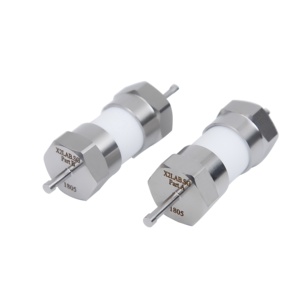
Removable Coin Battery Simulator

Removable Coin Battery Simulator for Coin Cells

Ultra-low current ripple cell simulator designed for micro-ampere dynamic load characterization, coin cell R&D, and electrochemical analysis.
Micro-Power Lab Grade
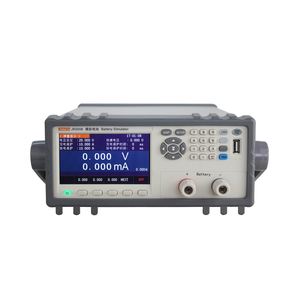
JK5506 Battery Simulator

JK5506 Multi-Channel Programmable Battery Simulator

Industrial benchtop simulator providing bipolar dynamic sinking and sourcing for real-time emulation of multi-chemistry battery packs.
Bipolar DC Fast Transient
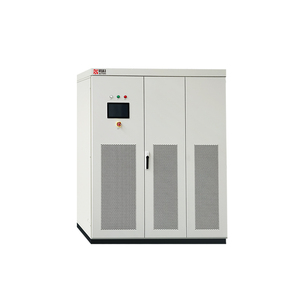
Power Aikesaibo High-dynamic Battery Simulator

Power Aikesaibo High-Dynamic Battery Simulator 150-1000KW

Megawatt-class high-voltage dynamic electronic load and simulator for heavy industrial EV powertrains, grid storage, and high-capacity traction testing.
150KW – 1MW+ High Voltage
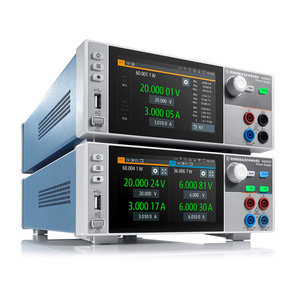
Rohde & Schwarz NGM201-NGM202 Battery Simulator

Rohde & Schwarz NGM201/202 Industrial Bipolar Simulator

Precision 2-quadrant DC power supply and electronic dynamic load featuring high-speed acquisition, ultra-low noise, and universal 100-240V AC input.
Bipolar 2U Precision Measurement
Coin Cell Simulator CR2032 CR2016

Coin Cell Simulator (CR2032/CR2016) for Electrochemical Labs

Specialized low-voltage dynamic load simulator tailored for coin cell battery testing, micro-sensor power analysis, and electrochemical impedance studies.
CR2032/2016 Electrochemical
24-Channel Battery Cell Simulator for BMS

24-Channel Battery Cell Simulator for BMS Validation

Multi-channel dynamic cell simulator with active cell balancing test routines, high isolated voltage channels, and real-time SOC estimation injection.
24 Isolated Ch BMS HIL Testing
Technical Architecture & Regulatory Standard

Engineering CE Certified Dynamic Loads for Global Supply Chains

In the modern power electronics ecosystem, dynamic electronic loads and battery cell simulators are no longer passive energy sinks. They serve as mission-critical hardware-in-the-loop (HIL) validation instruments across automotive electrification, aerospace microgrids, renewable energy storage, and semiconductor test bays.

CE Mark Rigor & EMC Directives

Global export compliance demands adherence to European safety and electromagnetic standards. Our dynamic loads undergo rigorous testing under IEC/EN 61010-1 (Safety requirements for electrical equipment for measurement, control, and laboratory use) and IEC/EN 61000-6-2 / 61000-6-4 for heavy industrial electromagnetic compatibility (EMC).

This guarantees that fast dynamic load switching—exceeding $di/dt$ slew rates of 10 A/µs—does not inject destructive conductive interference back into the main AC grid or distort nearby measurement transducers.

Current-Fed vs. Voltage-Fed Topology

Unlike standard switch-mode electronic loads that rely heavily on large capacitive banks across the input terminals, our industrial-tier dynamic load instruments leverage advanced Current-Fed Topologies.

By storing energy inductively on the internal DC bus rather than capacitively, current-fed conversion delivers natural short-circuit immunity, extreme tolerance against severe voltage spikes, and instant transient recovery when testing wide-bandgap (SiC and GaN) power switches under aggressive duty cycles.

Microsecond Transient Response

Modern battery management systems (BMS) and DC-DC converters experience rapid load steps during real-world acceleration or pulse-power operation. Our programmable dynamic loads feature microsecond response times with zero output overshoot.

Engineers can program complex arbitrary profiles, simulating pulse loads, internal resistance (IR) variations, and real-time state-of-charge (SOC) decay with high-fidelity 16-bit DAC control.

0.05%
Voltage/Current Precision
<10µs
Transient Dynamic Slew
1000V+
High Voltage DC Capability
100%
CE & RoHS Certified
Buyer Procurement Matrix

Dynamic Load Selection Guide & Technical Specifications

Choosing the proper dynamic load or battery cell simulator depends on operational voltage windows, peak dynamic slew rates ($di/dt$), power envelope demands, and thermal rejection environment.

Equipment Platform Power Class Dynamic Slew Rate Primary Operating Modes Target Application Compliance Rating
Micro-Coin Cell Simulators 0.5W – 50W > 2 A/µs CC, CV, CR, Micro-CP IoT devices, Wearables, Electrochemical Labs CE / LVD / EMC
Benchtop Battery Simulators 100W – 3kW > 5 A/µs CC, CV, CR, CP, Battery IR Automotive Sensors, Consumer Electronics QA CE / IEC 61010-1
Multi-Channel BMS Testers 24-Channel Isolated < 50µs Step Bipolar Sourcing & Sinking BMS HIL Validation, Cell Balance Testing CE / RoHS / ISO
Linear MOSFET DC Loads 1.25kW – 20kW > 12 A/µs Ultra-Low Noise Sinking Fuel Cell Stacks, SiC/GaN Converter Stress CE Industrial
Megawatt Dynamic Load Systems 150kW – 1MW+ Programmable Ramp Regenerative & Resistive Grid EV Powertrain, Wind Tunnels, Traction Inverters CE Heavy Industry

Linear MOSFET vs. Switch-Mode Dynamic Loads

When measuring delicate sensor feedback or low-noise ripple on DC buses, standard PWM switch-mode loads introduce EMI artifacts that skew test results. Linear MOSFET dynamic loads sink current by controlling the gate voltage of power transistors operating in their linear active region.

This yields clean current waveforms with negligible high-frequency switching noise—essential for characterizing micro-ampere standby currents or performing broadband electrochemical impedance spectroscopy (EIS).

BMS Validation via Isolated Multi-Channel Simulation

Simulating a 800V EV pack requires precise voltage control down to individual series-connected cells. Traditional power supplies cannot safely stack high-voltage floating outputs due to isolation breakdown.

Our 24-channel battery cell simulators feature channel-to-channel galvanically isolated power supplies capable of floating up to 1000V DC. Each channel independently emulates cell voltage, internal resistance, and balancing currents, delivering authentic Hardware-in-the-Loop (HIL) conditions for BMS controllers.

Strategic Procurement Insights

Future Trends in Dynamic Load & Battery Simulation Technology

As global industries accelerate electrification and transition toward high-voltage DC architectures, procurement teams must align equipment specifications with emerging technical imperatives.

1. Transition to 1500V DC High Voltage Architectures

Commercial electric vehicles, utility-scale battery energy storage systems (BESS), and solar inverters are rapidly shifting from 400V/800V up to 1500V DC topologies to minimize copper losses and elevate system efficiency.

Future-proof procurement strategies mandate dynamic electronic loads rated for continuous 1500V operation with wide constant-power envelopes, enabling single-instrument coverage across broad voltage/current curves.

2. Wide Bandgap (SiC/GaN) High-Frequency Dynamics

Silicon Carbide (SiC) and Gallium Nitride (GaN) power devices operate at switching speeds ten times faster than legacy IGBTs. This requires dynamic loads capable of sinking high peak current steps within microsecond windows without inductive voltage ringing.

Advanced dynamic loads incorporate ultra-low parasitic inductance internal busbars and fast analog control loops to mirror SiC converter dynamics accurately.

3. Digital Twin & Automated SCPI Test Frameworks

Smart factories rely on automated test equipment (ATE) controlled remotely via standardized command interfaces. Modern dynamic loads integrate native Ethernet/LXI, USB, RS-232, and optional Modbus TCP or IEEE-488 GPIB interfaces.

Comprehensive Python, LabVIEW, and IVI driver support empowers engineering teams to integrate dynamic load hardware seamlessly into digital twin simulation pipelines and automated factory calibration racks.

Enterprise Manufacturing Competence

Why Tier-1 Manufacturers & Exporters Partner With Us

From initial circuit design to full-load burn-in testing, our vertically integrated manufacturing ensures unparalleled quality control, compliance traceability, and global export reliability.

Vertical Integration & Quality Assurance

Every dynamic load unit undergoes end-to-end assembly within ISO-certified facilities. We manage sheet metal fabrication, high-frequency magnetic winding, surface-mount PCB assembly, and final system integration under one unified quality standard.

  • 100% Full-Power Burn-In: Every instrument is burn-in tested at maximum voltage and current capacity under elevated ambient temperatures prior to export shipment.
  • Traceable Calibration: Shipped with NIST-traceable calibration certificates, satisfying stringent automotive IATF 16949 audit demands.
  • Modular Scalability: Master-slave control bus protocols allow parallel linkage of multiple loads to scale capacity seamlessly up to megawatt levels.

Global Export Compliance & Support Footprint

Navigating international trade requirements requires robust packaging, clear documentation, and localized service capability. As experienced exporters, we streamline global delivery with full customs compliance and comprehensive technical documentation.

  • CE Mark Documentation: Full technical files, Declarations of Conformity (DoC), and safety test reports provided for seamless European customs clearance.
  • Universal Mains Input: Designed with wide range 100-240V AC or multi-phase industrial AC inputs compatible with 50Hz/60Hz grids worldwide.
  • Global Technical Service: Rapid-response factory repair, remote diagnostic access, and worldwide spare parts availability.
Engineering Knowledge Base

Frequently Asked Questions by Overseas Procurement Teams

Technical clarification on certification, application boundaries, and operational dynamics of CE-certified dynamic loads.

What specific standards define a CE Certified Dynamic Load?
A CE-certified dynamic load must strictly comply with two primary European Directives: the Low Voltage Directive (LVD 2014/35/EU) and the Electromagnetic Compatibility Directive (EMC 2014/30/EU). Safety compliance is validated via IEC/EN 61010-1, ensuring creepage distances, electrical insulation, terminal guarding, and thermal safety meet rigorous limits. EMC compliance is governed by IEC/EN 61000-6-2 (Industrial Immunity) and IEC/EN 61000-6-4 (Industrial Emissions), certifying that fast dynamic current switching does not induce electrical noise onto main lines or affect surrounding sensitive instruments.
How does a high dynamic load handle back-EMF during reactive load testing?
When testing inductive components like electric motors, transformers, or long cable harnesses, interrupting load current generates significant inductive kickback (back-EMF voltage spikes). Our industrial current-fed dynamic loads integrate active transient over-voltage clamping circuitries and optional internal reverse-blocking diodes. This design safely absorbs transient inductive energy without tripping internal protection gates or causing device breakdown.
Can your battery simulators simulate real-time SOC and battery degradation profiles?
Yes. Through high-speed digital signal processor (DSP) controls, our battery simulators alter their output voltage and internal resistance dynamically based on programmed battery mathematical models. By continuously recalculating State-of-Charge (SOC), State-of-Health (SOH), cell chemistry curves (Lithium-ion, LFP, NMC, Solid-State), and temperature coefficients, the instrument mirrors actual battery pack response under varying load steps in real time.
What is the advantage of isolated multi-channel cell simulation for BMS testing?
Battery Management Systems monitor individual cell voltages in a series string where total pack voltage can reach 800V to 1000V DC. Standard bench supplies share a common ground and cannot be connected in series without causing short circuits. Multi-channel battery cell simulators provide high galvanic channel-to-channel isolation (up to 1000V floating capability), allowing each channel to simulate an isolated cell inside a high-voltage stack for precise cell-balancing, wire disconnect, and fault-injection testing.
How are high-power dynamic loads cooled, and what facility utilities are required?
Units up to 20kW typically feature forced-air cooling with intelligent variable-speed fan control, keeping acoustic noise low during bench operation. For megawatt-class systems (150kW to 1MW+), water cooling (liquid-to-air or liquid-to-liquid heat exchangers) is employed to dramatically reduce physical rack footprint and isolate dissipated heat from the laboratory environment. Water-cooled configurations require clean industrial cooling water at specified flow rates and operating pressures.
What lead times can international buyers expect for custom-configured dynamic loads?
Because our manufacturing facility maintains vertical integration—handling machining, PCB assembly, magnetics, and final test under one roof—typical build times for custom made-to-order dynamic loads range between 4 to 6 weeks. Standard stock configurations and ready-to-ship benchtop units can be dispatched within 5 to 10 business days following export verification.

Accelerate Your Power Testing Capabilities

Consult with our senior application engineers to evaluate voltage profiles, transient response demands, and CE-certified equipment specifications for your upcoming program.