Global Manufacturing & OEM Supplier

CE Certified Blocking Diode Factories & Factory Platform

High-Reliability Anti-Reverse Modules, TVS Surge Suppression & Ideal Diode Solutions for Solar PV, BESS & Industrial Power Infrastructure

100V-1600V
Voltage Range Ratings
< 0.05 mA
Ultra-Low Reverse Leakage
CE / RoHS
Certified Compliance
500,000+
Monthly Factory Output

CE Certified Blocking Diode Portfolio

Engineered for low forward voltage drop, maximum reverse isolation, and extreme thermal resilience across renewable energy and high-voltage DC circuits.
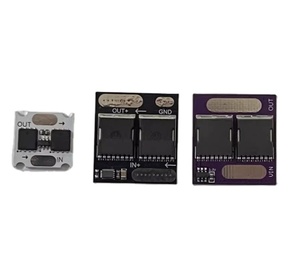
100V 60A Ideal Diode Module
100V 60A Ideal Diode Module with Anti-Reverse Current & Voltage Regulation
Contact Us
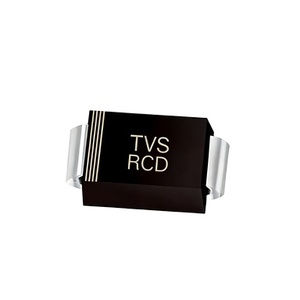
TVS Diode SMC Packaging
TVS Diode Instantaneous Suppression Diode Surge Protection (SMC Package)
Contact Us
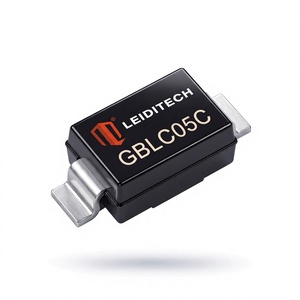
GBLC Series TVS Diode Array
GBLC Series TVS Diode Array Bidirectional ESD Protection SOD-323 3.3V to 36V
Contact Us
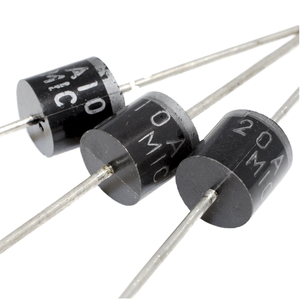
Schottky Barrier Diode 100pcs R-6
100pcs Bulk Pack 6A10 10A10 20A10 Schottky Barrier Rectifier Diode 1000V R-6
Contact Us
Schottky Barrier Diode Single Box R-6
6A10 10A10 20A10 Schottky Rectifier Diode 6A-20A 1000V Anti Backflow R-6
Contact Us
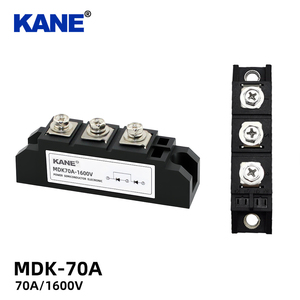
MDK 70A 1600V Blocking Diode Module
MDK 70A 1600V Solar Blocking Diode Module Reverse Protection for PV Off-Grid
Contact Us
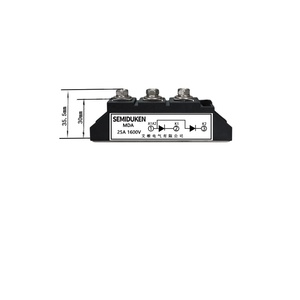
High Power Solar Blocking Diode 55A-400A
Blocking Diode Anti-Reverse Module for Solar PV 55A to 400A High Power Modules
Contact Us
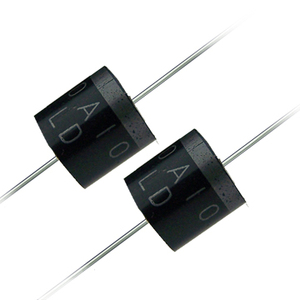
10A 1000V Blocking Diode 10A10
10A 1000V High Reliability Blocking Diode 10A10 Axial Circuit Protection
Contact Us

Industrial Whitepaper: Advanced Reverse Protection Topologies in Photovoltaic & Energy Storage Systems

In modern high-voltage DC distribution networks, microgrids, and utility-scale photovoltaic (PV) installations, reverse current flows pose severe operational risks. Unchecked reverse polarization can cause catastrophic battery pack degradation, irreversible thermal runaway in shaded PV strings, and severe inverter stage damage. Sourcing components from verified, CE Certified Blocking Diode Factories ensures that hardware complies with strict electromagnetic compatibility (EMC), Low Voltage Directives (LVD), and mechanical isolation safety margins mandated by European and international electrical codes.

1. Technical Physics of Reverse Current Sinking & Isolation

A blocking diode functions as a unidirectional electrical valve. When photovoltaic arrays operate in parallel, localized shading, cloud coverage, or physical degradation reduces the open-circuit voltage ($V_{oc}$) of individual strings. Without a reverse blocking diode, higher-voltage parallel strings back-feed current into the shaded string. This induces concentrated thermal hotspots exceeding $150^\circ\text{C}$, destroying crystalline silicon cells and causing localized fire hazards.

Our OEM factory engineering teams implement advanced semiconductor passivation layers and Direct Copper Bonding (DCB) ceramic substrates to optimize the tradeoff between forward voltage drop ($V_f$) and repetitive peak reverse voltage ($V_{RRM}$):

  • Passive Silicon Schottky Isolation: Utilizing metal-to-semiconductor barrier junctions to deliver ultra-low $V_f$ ($0.45\text{V} - 0.65\text{V}$), dramatically minimizing thermal dissipation ($P_{loss} = V_f \times I_{avg}$) in low-to-medium voltage circuits.
  • High-Power Thyristor/Diode Modules (MDK Series): Standard silicon p-n junctions encapsulated in epoxy-molded isolated bases rated for $1600\text{V} - 2200\text{V}$ reverse isolation, capable of withstanding massive peak surge currents ($I_{FSM}$) up to $3000\text{A}$ during grid fault events.
  • N-Channel MOSFET Active "Ideal Diodes": Utilizing integrated high-side gate drivers to toggle low $R_{DS(on)}$ MOSFETs. Ideal diode modules reduce thermal loss by over $90\%$ compared to classic PN diodes, making them the superior choice for high-density 60A-100A DC power management.

2. CE Certification & Rigorous Factory Testing Standards

To meet European Norms (EN 61000-6-2, EN 61000-6-4, EN 62109-1), CE-certified production lines execute exhaustive testing procedures prior to batch shipment. Every module undergoes 100% automated optical inspection (AOI), thermal impedance measurement ($R_{th-jc}$), high-potential electrical isolation testing ($V_{ISO} \ge 3500\text{V RMS}$ for 1 minute), and continuous dynamic elevated-temperature reverse bias (HTRB) testing at $125^\circ\text{C}$ for 1000 consecutive hours.

Future Sourcing & Technology Development Trends

Analysis of market evolution, wide-bandgap integration, and strategic OEM procurement vectors through 2030.

1. Transition to 1500V DC Architecture

Utility-scale solar installations are rapidly migrating from 1000V DC to 1500V DC systems to reduce cable copper weight and balance-of-system (BOS) costs. Sourcing high-creepage MDK and MDC diode modules rated for $1600\text{V} - 2000\text{V} V_{RRM}$ is becoming standard practice across tier-1 EPC contractors.

2. Active Smart Telemetry & Ideal Diodes

Conventional passive diodes are being supplemented by active "ideal diode" circuits featuring embedded NTC thermistors and fault-flag signals. Smart combiner boxes utilize these signals to trigger automated circuit breakers before over-temperature threshold limits are breached.

3. Silicon Carbide (SiC) Schottky Integration

SiC blocking diodes feature zero reverse recovery charge ($Q_{rr}$) and temperature-independent switching behavior. This technology is dominating high-frequency DC-DC converters, EV fast-charging stations, and aerospace power distribution hubs where efficiency targets exceed $99.2\%$.

Enterprise Manufacturing Capabilities & OEM Customization

As a premier OEM power semiconductor manufacturer, our factory ecosystem delivers vertically integrated production—from wafer processing, copper wire bonding, and vacuum soldering to custom heatsink integration and high-voltage encapsulation. Our modern automated assembly lines accommodate low-power surface-mount TVS diodes (SOD-323, SMC) alongside industrial high-current module bases (MDK 55A through 400A).

Vertically Integrated Production

In-house sheet metal stamping, CNC copper machining, magnetics winding, and automated SMT placement reduce lead times to 4–6 weeks for custom orders.

Rigorous 100% Full-Power Burn-In

Every industrial module undergoes dynamic burn-in and thermal stress screening under full electrical load, eliminating infant mortality failures prior to deployment.

Global Sourcing & Supply Assurance

Buffer inventories for standard 10A10, R-6 axial, TVS SMC, and MDK 70A modules enable rapid off-the-shelf dispatch for urgent EPC maintenance projects.

Frequently Asked Questions (FAQ) for OEM Procurement

Essential technical and procurement insights for system engineers, supply chain managers, and electrical designers.

What is the difference between a standard Schottky diode, an MDK module, and an Ideal Diode module?
Standard axial Schottky diodes (such as 10A10, 6A10, 20A10 in R-6 packaging) offer compact passive protection up to 20A. MDK modules represent high-power industrial assemblies encapsulating heavy-duty silicon dies within isolated ceramic housings rated up to 400A and 1600V. Ideal diode modules utilize active N-channel MOSFETs governed by smart driver ICs; they mimic diode unidirectional behavior but exhibit near-zero forward voltage drop, drastically reducing heat generation in space-constrained applications.
Why is CE Certification essential for blocking diodes in solar PV and industrial projects?
CE certification ensures compliance with European safety and electromagnetic standards, specifically Low Voltage Directive (LVD) 2014/35/EU and EMC Directive 2014/30/EU. In PV power stations, uncertified components risk breakdown under high voltage spikes, leading to fire risks, voided insurance policies, and regulatory non-compliance during grid-interconnection inspections.
How do I select the current rating ($I_{F(AV)}$) and reverse voltage ($V_{RRM}$) for a solar PV string blocking diode?
As a rule of thumb, select a repetitive peak reverse voltage ($V_{RRM}$) rating at least 1.5 to 2.0 times the maximum open-circuit voltage ($V_{oc}$) of the array at minimum ambient temperatures. For current rating ($I_{F(AV)}$), choose a module rated for 1.56 times the string's maximum short-circuit current ($I_{sc}$) to account for irradiance spikes and continuous ambient thermal derating.
What role do TVS Diodes (e.g., SMC packaging, GBLC Series) play alongside blocking diodes?
While blocking diodes prevent continuous reverse back-feed current, Transient Voltage Suppression (TVS) diodes and ESD arrays protect sensitive control units, telemetry circuits, and gate drivers against ultra-fast high-voltage surges caused by lightning strikes, electrostatic discharge (ESD), and inductive switching transients. Combining TVS surge protection with robust blocking diodes yields comprehensive circuit immunity.
Can factory customization tailor terminal configurations and heatsink mounting?
Yes. Our factory provides custom terminal plating (tin or nickel-plated copper busbars), pre-applied thermal phase-change pads, integrated thermistors for temperature sensing, and custom packaging ranging from standard DIN-rail modules to water-cooled cold plate baseplates for multi-megawatt systems.
What is the typical manufacturing lead time for bulk OEM/ODM orders?
Standard catalog items (like axial Schottky rectifiers and standard MDK 70A/1600V modules) are maintained in ready-to-ship inventory with 3–5 day dispatch times. Custom engineered modules, non-standard voltage screening, or large-volume OEM production runs typically require 4 to 6 weeks from tooling confirmation to final CE-certified burn-in testing.

Partner with a Certified Power Semiconductor Factory

Consult directly with our semiconductor application engineers for custom electrical ratings, thermal modeling calculations, or volume sample evaluations.

Connect with Factory Engineers