
Explore our industrial line of European Conformity (CE) marked battery analyzers, digital battery conductance testers, high-voltage load aging machines, and Li-ion BMS testing platforms.
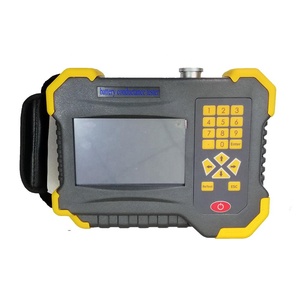
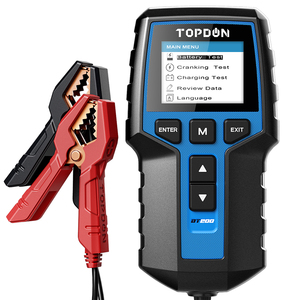
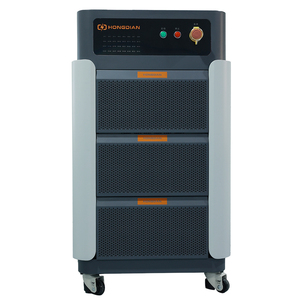
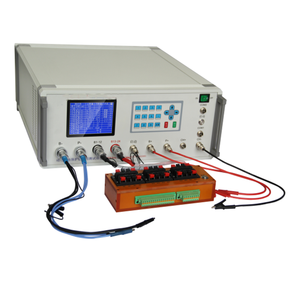
In the global automotive, energy storage (ESS), and industrial maintenance sectors, sourcing battery testers from a certified manufacturer is no longer merely a procurement checkbox—it is a critical requirement for functional safety, electromagnetic stability, and measurement precision.
As battery chemistries transition from conventional lead-acid (SLI, AGM, GEL) to high-voltage Lithium Nickel Manganese Cobalt Oxide (NMC) and Lithium Iron Phosphate (LiFePO4) formulations, the diagnostic load requirements become far more rigorous. Procuring non-certified testing apparatus poses grave risks, including internal arc flashes, catastrophic electromagnetic interference (EMI) with vehicular ECUs, and corrupted State-of-Health (SoH) metrics due to uncalibrated analog-to-digital converters (ADCs).
A legitimate CE Certified Battery Tester Supplier must provide complete Declaration of Conformity (DoC) documentation verifying adherence to two mandatory European Union directives:
B2B buyers frequently evaluate two distinct measurement topologies when selecting battery testing equipment. Understanding the underlying metrology is vital for engineering teams responsible for fleet uptime and quality control:
| Diagnostic Topology | Primary Measurement Mechanism | Key Standard Compliance | Ideal Application Profile |
|---|---|---|---|
| Passive AC Conductance | Injects low-frequency AC signals (100–1000 Hz) to calculate real internal impedance ($R_i$). | EN 61010-1, CE LVD | Rapid automotive service bays, quick 12V SLA/AGM battery screening. |
| Dynamic Pulse Load Discharge | Applies a heavy DC load pulse (50A to 1000A+) to simulate engine cranking voltage drop over time. | EN 61326-1 Class A, CE EMC | Automotive OEM starter validation, high-power cranking capacity testing. |
| Electrochemical Impedance Spectroscopy (EIS) | Sweeps multiple frequencies across the micro-Hz to kHz spectrum to construct Nyquist plots. | IEC 62619, CE Industrial | R&D laboratories, EV module degradation profiling, second-life battery sorting. |
| Regenerative High-Power Cabinet Aging | Controlled grid-tied charge/discharge cycles up to 380V/100A with $\pm 0.05\%$ current accuracy. | Directive 2014/35/EU, CE High Voltage | Battery pack manufacturing lines, industrial ESS module burn-in testing. |
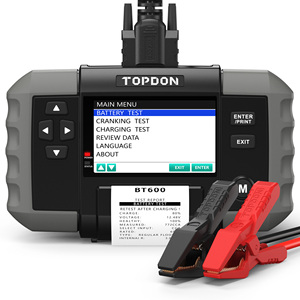
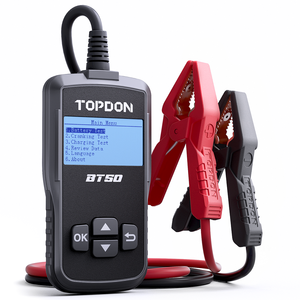
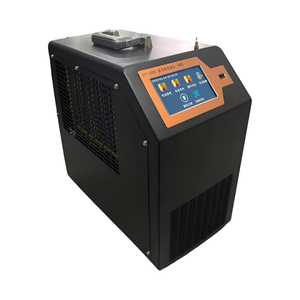
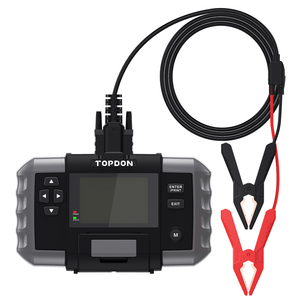
For modern workshops and lab facilities, pairing a handheld conductance/impedance unit like the TOPDON BT600 with high-capacity cabinet-level discharge systems (such as the AC380V 100A Battery Aging System) ensures full coverage across both incoming cell qualification and final pack certification.
The acceleration of electric mobility, renewable microgrids, and solid-state energy storage is reshaping procurement specifications for industrial battery testing hardware.
Traditional diagnostic algorithms calibrated exclusively for lead-acid flooded cells fail when applied to modern Lithium Iron Phosphate (LFP) or Sodium-ion architectures due to their ultra-flat discharge curves. Future CE-certified testers integrate programmable look-up tables and dynamic machine learning curves to accurately evaluate State of Charge (SoC) and State of Health (SoH) across hybrid chemical variants without manual recalibration.
Stand-alone testing is giving way to IoT-enabled testing ecosystems. Modern equipment now incorporates Bluetooth 5.0, Wi-Fi, and CAN-bus connectivity. Test records—including graphic voltage ripple curves, temperature logs, and internal resistance measurements—are automatically synchronized to enterprise cloud databases for predictive maintenance modeling and warranty claim auditing.
As battery packs increase in capacity and lower their internal resistance (often under 0.5 mΩ), standard 2-wire measurement introduces unacceptable lead resistance errors. Advanced handheld and benchtop testers rely on 4-wire Kelvin Kelvin connections, utilizing isolated force and sense leads to achieve micro-ohm resolution ($\pm 0.001\text{ m}\Omega$), guaranteeing early detection of degraded busbar welds or weak cell interconnects.
Modern battery pack testing requires verifying the protective circuit board (PCB) and Battery Management System (BMS). Next-generation 1-24 Series BMS Testers actively simulate over-charge, over-discharge, short-circuit, and cell-balancing faults to verify safety tripping speeds in milliseconds before the pack is sealed into production enclosures.
Industrial sustainability initiatives demand that high-power battery discharge testing no longer dissipate energy pure heat through resistive banks. Modern AC380V cabinet aging systems utilize bidirectional inverter topologies, feeding up to 92% of discharged battery energy back into the facility power grid, dramatically reducing operational electricity costs and HVAC thermal loads.
In workshop environments, immediate documentation protects service providers against customer disputes. Handheld battery analyzers feature high-speed thermal printers capable of outputting cold cranking amps (CCA), voltage ripple graphs, and charging system health stamps in under 3 seconds, accelerating customer service workflows.
Procurement teams sourcing battery test equipment must look beyond initial hardware acquisition costs. Evaluating suppliers on compliance stability, modular scalable architectures, and vertically integrated manufacturing capability is key to long-term operational success.
Our operations are built on rigorous engineering control, vertical manufacturing integration, and strict compliance quality assurance.
From high-speed Surface Mount Technology (SMT) PCB assembly and CNC sheet metal enclosure fabrication to custom magnetics transformer winding, every production stage is housed in our state-of-the-art facility. This minimizes supply chain vulnerabilities and ensures stringent quality over every component.
Every single battery tester and aging cabinet undergoes 100% full-load burn-in testing before shipment. We simulate harsh real-world industrial environments to eliminate infant mortality failure modes and guarantee uncompromised reliability out of the box.
Leveraging stocked common sub-assemblies and agile manufacturing workflows, we maintain industry-leading lead times of 4 to 6 weeks for custom programmable equipment, with standard handheld models ready to ship directly from warehouse inventory.
Answers to common technical, compliance, and ordering questions submitted by enterprise procurement managers and test engineers.
CE Certification requires rigorous testing under two main frameworks: Safety testing under LVD (EN 61010-1) verifies insulation resistance, high-voltage dielectric withstand, ground bonding integrity, and protection against flame spread. Electromagnetic Compatibility (EMC) testing under EN 61326-1 evaluates radiated emissions (to ensure no interference with wireless equipment) and immunity against electrostatic discharge (ESD), fast electrical transients (EFT), and high-energy voltage surges.
Standard 2-wire testing passes current and measures voltage through the exact same cable pair, meaning the contact resistance of the clamps and lead wire impedance are erroneously added to the battery's internal resistance value. A 4-wire Kelvin setup uses two independent lead pairs: one pair drives the test current while the second high-impedance pair senses voltage directly at the battery terminal. This eliminates test lead resistance, allowing accurate micro-ohm measurements down to $\pm 0.001\text{ m}\Omega$.
Yes. Instruments such as the TOPDON BT600 and our specialized BMS protective board testers are specifically engineered with pre-configured algorithms for Lead-Acid (AGM, GEL, EFB), Lithium-ion (NMC), and LiFePO4 chemistries. Users can select the appropriate chemistry profile to dynamically adjust voltage thresholds and resistance evaluation logic.
An integrated thermal printer (as featured on the BT600 series) allows technicians to instantly output physically verifiable diagnostic receipts showing state of charge, measured cold cranking amps (CCA), internal resistance, and overall health status. This provides transparent proof of diagnostic results to vehicle owners or warranty auditors without requiring a PC connection.
A 1-24 Series BMS Tester validates that the Battery Management System's protective MOSFETs trip correctly during fault conditions. It simulates cell over-voltage, cell under-voltage, total pack over-current, and temperature sensor failures across each individual cell channel (up to 24 series cells), measuring response time in milliseconds to prevent thermal runaway incidents.
High-power battery charge and discharge aging systems typically require a 3-phase AC380V $\pm 10\%$ power input operating at 50/60Hz. They feature built-in power factor correction (PFC > 0.95) and THD distortion mitigation to comply with industrial grid connection standards while delivering steady DC output currents up to 100A or higher.
For standard off-the-shelf units, there is no strict MOQ. For custom OEM/ODM orders featuring specialized client branding, custom housing colors, or unique firmware interfaces, the typical MOQ ranges from 50 to 100 units depending on the model. Standard production lead times are 4 to 6 weeks following engineering sign-off.
All CE-certified battery testers come standard with a 1-year comprehensive factory warranty, extendable up to 3 years under enterprise service level agreements (SLAs). We offer modular replacement assemblies, remote engineering technical support, and full recalibration procedures to maintain ISO compliance across overseas test facilities.