Hypersonic Wind Tunnel Power Systems are essential to testing vehicles that move through air at extreme speeds. These facilities need more than a powerful motor or a large electrical supply. They must deliver controlled energy to compressors, heaters, pumps, and measurement equipment, often under demanding operating conditions. A brief voltage dip can disrupt a test sequence. Unstable power may also affect data quality, equipment life, or safe operation.
The challenge is coordination. A tunnel’s power architecture must match its test method, operating schedule, and thermal requirements. Engineers consider load changes, backup capacity, conversion efficiency, cooling, and monitoring. They also need to distinguish between the power required to create a test condition and the power used by supporting systems. Details matter: a compressor starting, a heater ramping, or a sensor losing a clean signal can change what the team learns. Small disruptions count.
Reliable planning draws on facility-specific measurements and engineering review, not a single universal design. Instrumentation can reveal fluctuations that routine readings miss, while careful maintenance helps identify weakening components before a test is affected. There are trade-offs, too. More reserve capacity may improve resilience, but it can add cost and complexity. And some assumptions deserve another look; designs that work well at one tunnel may not transfer neatly to another. Understanding these power systems helps explain how hypersonic testing can produce useful, repeatable results without treating electricity as an afterthought.
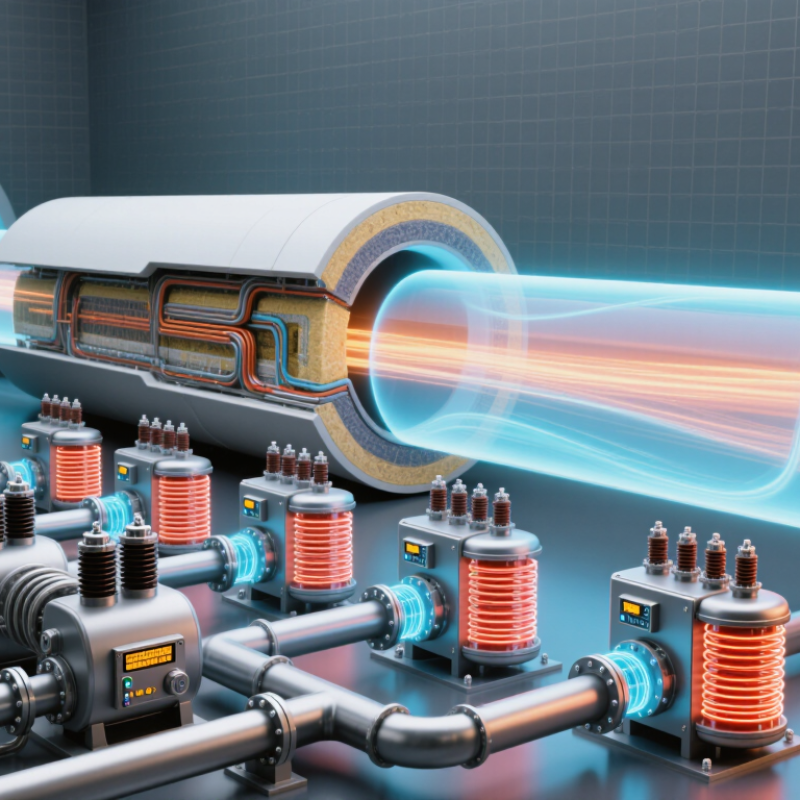
A hypersonic wind tunnel recreates selected conditions around an aircraft or spacecraft moving at extreme speed. Researchers control factors such as Mach number, pressure, temperature, and gas density. These settings help reproduce shock waves, compressed air, and the hot layer that forms near a vehicle’s surface. Small sensors can record pressure and heat across a test model. Some facilities produce only brief test runs, so timing matters.
The power system helps create and control these demanding conditions. Depending on the facility, electrical power may operate compressors, heaters, valves, and data equipment. A stable supply supports repeatable airflow and reliable measurements; fluctuations can complicate comparisons between runs. Yet power alone cannot make a test realistic. The model, test gas, and measurement setup must also match the question being studied. No tunnel reproduces every detail of real flight, and that limitation deserves attention.
Tips: Check the test duration and measurement locations before interpreting results. A clear pressure trace can reveal where a shock sits.
| Test dimension | What the tunnel reproduces | Why the power or energy system matters | Important qualification |
|---|---|---|---|
| Hypersonic flow speed | Freestream flow at hypersonic Mach numbers; hypersonic flow is conventionally defined as Mach 5 or higher. | The facility must create and control the flow conditions needed to reach the target Mach number, while its measurement and control systems operate reliably during the test. | Mach number alone does not define a complete flight simulation. Pressure, temperature, gas composition, and model scale also affect the result. |
| High-enthalpy flow | The high total enthalpy associated with air entering a vehicle at hypersonic speed, including energy that can drive chemical reactions in the gas. | In electrically heated or arc-heated facilities, the power supply provides energy to heat the test gas. Adequate energy input helps reproduce relevant thermal and chemical effects. | Not every hypersonic tunnel uses an electrical heater. Shock tunnels and expansion tubes generate test conditions through rapid gas compression and expansion. |
| Pressure and density | Selected test-section pressures and densities that help reproduce aerodynamic loading and, in some tests, relevant flow similarity parameters. | Compressors, stored-gas systems, heaters, valves, and control equipment must deliver the required operating conditions with suitable repeatability. | Achieving the correct Mach number does not automatically match Reynolds number or flight density; facility limits often require test-condition trade-offs. |
| Short-duration flight conditions | Some shock tunnels and expansion tubes create a useful test flow for a brief interval, often on the order of milliseconds. | Fast-response triggering, synchronized instrumentation, and dependable control systems are essential because measurements must be captured within a short test window. | Useful test time varies substantially by facility and operating condition; it is not a single value for all shock tunnels or expansion tubes. |
| Longer-duration heated flow | Some arc-heated facilities can provide comparatively long-duration high-enthalpy flow for thermal-protection and materials testing. | High-power delivery, cooling, electrical protection, and stable operation help maintain the selected test condition during the run. | Run duration and achievable conditions depend on facility design, test gas, heating method, and operating limits. |
| Gas chemistry and dissociation | At sufficiently high enthalpy, air may undergo vibrational excitation, dissociation, and other nonequilibrium effects relevant to hypersonic flight. | For electrically heated facilities, controlled energy input helps establish the intended gas state; diagnostics are needed to determine what state was actually produced. | Matching the flow’s chemistry and nonequilibrium state can be difficult. Results should be interpreted with the facility’s measured conditions and limitations in mind. |
| Repeatability and data quality | Comparable test conditions across repeated runs, allowing researchers to assess forces, heating, pressure distributions, and flow features. | Stable power delivery where applicable, precise timing, and coordinated data acquisition reduce unwanted variation and support reliable comparisons. | Repeatability also depends on calibration, model installation, instrumentation, and operating procedures—not just the power system. |
| Facility operation and safety | Controlled operation of the equipment that produces and measures high-speed test flows. | Power conditioning, interlocks, grounding, cooling, and fault protection help manage high electrical loads in facilities that use electrically powered systems. | Safety requirements differ by facility type; mechanical pressure systems and stored-energy systems also require dedicated protection. |
Note: Hypersonic wind tunnels reproduce selected aspects of flight rather than every flight condition simultaneously. The role of an electrical power system depends on the facility’s heating and flow-generation method.
It recreates selected airflow conditions around a fast-moving aircraft or spacecraft. Researchers control pressure, temperature, gas density, and Mach number. Small sensors record heat and pressure across a model. Some runs last only milliseconds.
Power can operate heaters, compressors, valves, and measurement equipment. Stable delivery helps keep airflow and readings consistent between runs. A brief disturbance may shift heating or pressure. Small changes matter.
It is a temporary drop in supply voltage. It may range from 0.1–0.9 per unit and last from half a cycle to one minute. Sensitive equipment can be affected, even by a short event.
They can log voltage, current, and trigger timing alongside pressure and temperature. Monitoring near the heater and measurement equipment may reveal local disturbances. The main supply reading alone may miss details.
They show where shock waves form and where heat gathers near an inlet. Researchers can use those observations to adjust shapes, materials, and thermal protection. A pressure trace can help locate a shock.
No. Models are smaller, test runs are limited, and tunnel walls can affect airflow. Test data is useful, but it is not a complete picture of flight.
No. A matching change in electrical and pressure records may suggest a connection, but it does not prove causation. That conclusion can be tempting, and still be mistaken.
No. Calibration, sensors, test gas, and tunnel conditions also matter. Repeating a run can help, but tunnel time is limited. The evidence can remain imperfect.
Hypersonic wind tunnels recreate the extreme conditions encountered when vehicles travel at several times the speed of sound, allowing researchers to study airflow, heating, pressure, and material performance in a controlled environment. Hypersonic Wind Tunnel Power Systems provide the energy needed to establish these demanding test conditions. Their key components work together to deliver and manage high levels of power, supporting the tunnel’s heating, airflow generation, and operating controls.
Stable power is essential for producing consistent test conditions, reliable measurements, and safe operation. Fluctuations can affect data quality or place added stress on tunnel equipment, so monitoring and protective controls are important parts of the system. These capabilities make hypersonic tunnels valuable for aerospace research and vehicle design, helping engineers evaluate shapes, materials, and thermal protection before moving toward real-world testing.