Why Choose High Current DC Power Supplies?
High Current DC Power Supplies support demanding equipment that ordinary bench supplies cannot handle reliably. They deliver stable current for battery testing, motors, electroplating systems, laboratory loads, and power electronics development. On a crowded test bench, a supply may need to provide 60 volts and 100 amps without excessive ripple or overheating. That is where design quality becomes visible.
Dr. Christophe Basso, a respected power-electronics engineer and author, emphasizes, “A power supply must be designed around its application.” This principle matters. A high current rating alone does not guarantee useful performance. Engineers should examine voltage stability, current-sharing behavior, cooling, remote sensing, overload protection, and response speed. Small details matter.
Thermal control matters most.
In practical evaluations, loose connections can create hot spots within minutes. Long output cables can also produce voltage drop, confusing test results. A reliable unit should offer clear displays, adjustable limits, and protection against short circuits and excessive temperature. These features reduce risk during repeated testing and production work.
Still, selecting the right supply is not always straightforward. A laboratory may value low noise, while a factory may prioritize rugged operation and fast control. Some specifications look impressive but lack meaningful test conditions. Careful comparison remains essential. This guide examines why High Current DC Power Supplies are chosen, where they provide measurable advantages, and which limitations deserve honest attention.
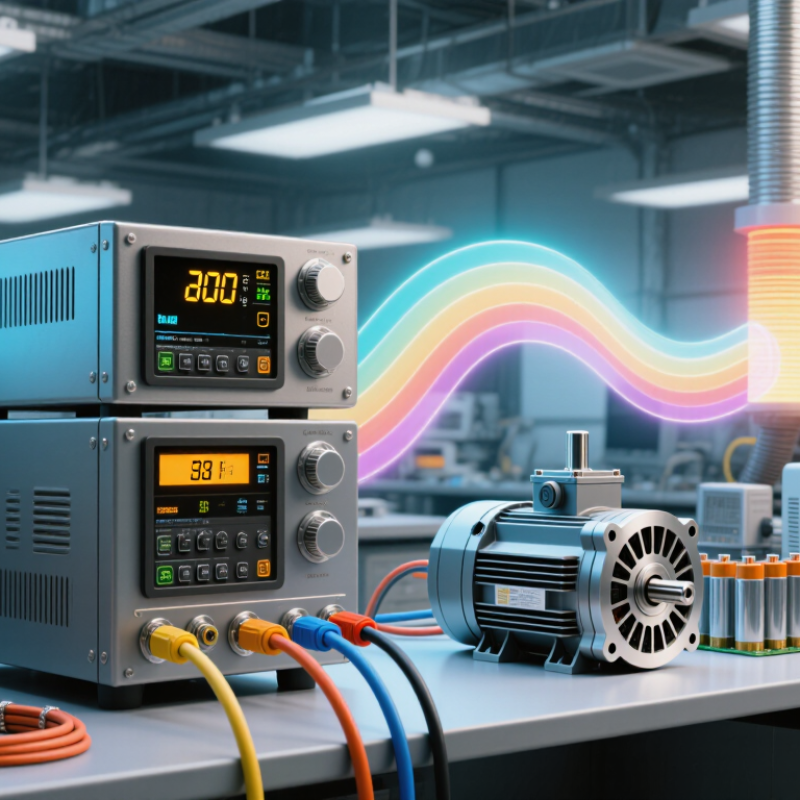
High current DC power supplies are engineered sources that deliver substantial direct current at controlled voltage. Unlike ordinary adapters, they support demanding loads such as battery test systems, electric vehicle components, motors, servers, and industrial production lines. Their value depends on more than maximum amperage. Engineers also examine voltage stability, ripple, transient response, cooling, protection functions, and continuous-duty performance.
The need is growing. The IEA’s Electricity 2024 report estimated that data centers consumed about 460 TWh worldwide in 2022. It also projected demand could exceed 1,000 TWh by 2026. In the United States, Lawrence Berkeley National Laboratory’s 2024 data center report estimated that data centers used 4.4% of national electricity in 2023. That share could reach 6.7% to 12% by 2028. These figures explain why efficient DC conversion and accurate testing matter.
In practical use, a high current supply may deliver 600 A at 12 V, or 100 A at 60 V. The power is similar, but the cables, heat, connectors, and safety requirements differ. A thick copper cable can become warm within minutes. Poor current sharing can also damage parallel loads. The label can mislead. A supply rated for peak current may not sustain it continuously. Engineers should verify thermal derating, measurement accuracy, remote sensing, and protection behavior under real operating conditions. Specifications alone are not enough.
High current DC power supplies convert AC input into stable DC output through several controlled stages. A rectifier creates a rough DC bus, while power-factor correction improves input behavior. A switching converter then adjusts voltage and current at high frequency. Feedback sensors continuously compare output values with the target. The controller corrects small errors within milliseconds.
For demanding loads, current sharing distributes output stress across parallel power stages. Heat sinks, fans, and temperature sensors remove energy that conversion cannot use. Protection circuits respond to overcurrent, short circuits, overvoltage, and excessive temperature. Ripple filtering keeps the DC waveform clean, which matters for batteries, motors, laboratory equipment, and semiconductor testing. The International Energy Agency reported more than 4 million public electric-vehicle charging points worldwide at the end of 2023. This growth increases demand for fast, high-current conversion systems. The U.S. Department of Energy also identifies thermal management, grid connection, and charging efficiency as continuing infrastructure concerns. High current is useful, but it is not automatically efficient.
Tips: Check the supply’s continuous current rating, not only its peak rating. Measure voltage ripple under the real load. Leave airflow around vents. Use short, correctly sized cables to reduce voltage drop. I have seen systems fail because cable heating was treated as a minor detail. It was not. Designers should also verify current-sharing behavior during startup, where uneven loading can briefly damage one module. A perfect specification sheet cannot replace testing with the actual load.
High-current DC power supplies are essential when equipment must deliver energy quickly, steadily, and safely. Electric vehicle battery testing is a clear example. The International Energy Agency reported that global battery demand from the energy sector reached about 750 GWh in 2023. Testing those cells requires controlled charging, discharge cycles, and rapid load changes. A supply may need hundreds of amperes while maintaining low voltage ripple. This matters during thermal testing and state-of-charge validation. Small errors can distort results.
Other applications need high current for different reasons. Semiconductor production uses precise DC power for plating, wafer processes, and equipment qualification. Battery laboratories also simulate regenerative braking and short acceleration events. Data centers are another growing case. The IEA estimates global data center electricity consumption could exceed 1,000 TWh annually by 2026. High-current supplies support server testing, busbar validation, and backup-power systems. They help engineers observe real faults before deployment.
Not every application needs maximum current. Oversizing can increase cost, heat, and measurement noise. That is often overlooked. Engineers should examine peak current, continuous current, duty cycle, and transient response together. The supply must also match cable capacity, cooling design, and protection limits. Industry reports provide useful scale, but they do not replace application testing. A realistic load profile remains necessary.
High current DC power supplies offer more than extra amperage. They provide controlled energy for demanding equipment, including motors, battery test systems, laboratory heaters, and industrial electronics. When a load starts suddenly, a capable supply can respond without a sharp voltage drop. That stability protects test results and reduces unexpected shutdowns.
The practical benefit is consistency. During repeated testing, regulated output keeps voltage and current close to the selected values. Remote sensing can compensate for voltage loss across long cables. Built-in overcurrent, overvoltage, and thermal protection add another layer of safety. Good models also display live readings, helping technicians notice drift before it affects a device.
Small details matter.
In real laboratory work, high current capacity can shorten testing time because equipment reaches operating conditions faster. It also leaves electrical headroom for startup surges and changing loads. However, more power does not automatically mean better performance. An oversized supply may waste energy, require stronger wiring, and create more heat. I have seen test setups fail because cable resistance was ignored, even when the power supply was correctly rated. Engineers should check continuous current, peak demand, cooling, connector ratings, and measurement accuracy before choosing a unit. A reliable power supply supports the experiment, but careful system design still determines whether the results can be trusted.
Selecting a high current DC power supply starts with the load, not the largest number on a specification sheet. Record the required voltage, steady-state current, and any startup or pulse demand. A 48 V device drawing 35 A continuously needs different headroom from a load that briefly peaks at 35 A. Check the supply’s continuous rating and its operating limits at your expected ambient temperature. Do not size it only for a short peak. That margin matters.
Check output ripple, regulation, and protection features against the equipment’s requirements. Sensitive electronics may need low ripple, while motors can draw a sharp current surge when starting. Confirm whether the unit supports remote sensing; it can help compensate for voltage drop across long, heavy cables. Also review cooling, connection size, and available input power. High current creates heat, and cramped enclosures can reduce usable output. A rating is not the whole story.
Tips: Compare the load’s real operating profile with the supply’s derating curve. Use correctly rated cables and secure connections. Test under load. A brief bench check can reveal voltage sag or unexpected heating before installation. Don’t assume the first choice is perfect; measurements may change the plan.
It delivers substantial direct current at a controlled voltage. It supports batteries, motors, servers, and industrial equipment. Maximum amperage is not everything.
It converts AC input into regulated DC output. Rectification creates a DC bus. A switching converter adjusts voltage and current. Sensors correct errors within milliseconds.
Check continuous current, voltage stability, ripple, transient response, and cooling. Review protection functions and measurement accuracy. Peak current can mislead.
Peak current may last only briefly. Continuous current shows what the supply can sustain safely. A unit rated for 600 amperes briefly may overheat during long operation.
Common uses include battery testing, motor evaluation, server testing, and industrial production. Electric vehicle components also require controlled charging and discharge cycles. Some laboratory tests need rapid load changes.
High current creates heat and voltage drop in cables. A thick copper cable can become warm within minutes. Use short, correctly sized cables. Cable details are easy to underestimate.
Power conversion creates heat that must leave the system. Fans, heat sinks, and temperature sensors support stable operation. Keep vents clear. Poor airflow can reduce output capacity.
Look for overcurrent, short-circuit, overvoltage, and overtemperature protection. Confirm how the supply responds during startup faults. Protection behavior should be tested with the actual load.
No. Test ripple, thermal performance, current sharing, and voltage accuracy under realistic conditions. Parallel modules may share current unevenly. A perfect datasheet cannot replace testing.
High Current DC Power Supplies are specialized devices designed to deliver a stable direct-current output at substantially higher current levels than standard power supplies. They convert incoming electrical energy into controlled DC power, while regulating voltage, limiting current, and often providing protection against overload, overheating, and short circuits. Their performance depends on accurate control systems, efficient power conversion, and reliable cooling.
These power supplies are useful in battery testing, motor and actuator development, electrochemical processes, semiconductor production, laboratory research, and other systems that require strong, consistent current. Their main benefits include stable operation, precise adjustment, fast response, improved testing accuracy, and the ability to support demanding loads safely. When selecting a suitable unit, users should consider the required voltage and current range, continuous or peak output, load characteristics, control accuracy, protection features, cooling method, efficiency, physical size, and communication options. Choosing the right combination ensures dependable performance and prevents unnecessary energy loss or equipment stress.