Choosing Electric Vehicle Test Power Supplies is not simply a matter of matching a voltage rating. Engineers need equipment that can reproduce real driving conditions, from steady battery charging to sharp regenerative-power changes. A supply with bidirectional operation, programmable voltage and current, and clear measurement records can make these tests more repeatable. It also helps teams spot unexpected behavior before a vehicle reaches the road.
Measurement pioneer William Thomson, Lord Kelvin, is often associated with the maxim, “To measure is to know.” It is a useful reminder for EV testing: accurate readings matter as much as impressive power ratings. In practice, engineers may compare response speed, output stability, protection features, and software integration. They should also check whether a unit can handle the test profile their project actually requires. A large specification sheet is not a test plan.
This guide looks at leading Electric Vehicle Test Power Supplies and the capabilities that distinguish them. It considers battery and inverter testing, energy recovery, and the practical demands of laboratory workflows. A supply can perform well on paper yet prove awkward when engineers configure repeated tests or review results. That deserves attention. No single model suits every lab, and product claims should be checked against published specifications and hands-on evaluation. The right choice depends on test objectives, power levels, and the team’s measurement needs.
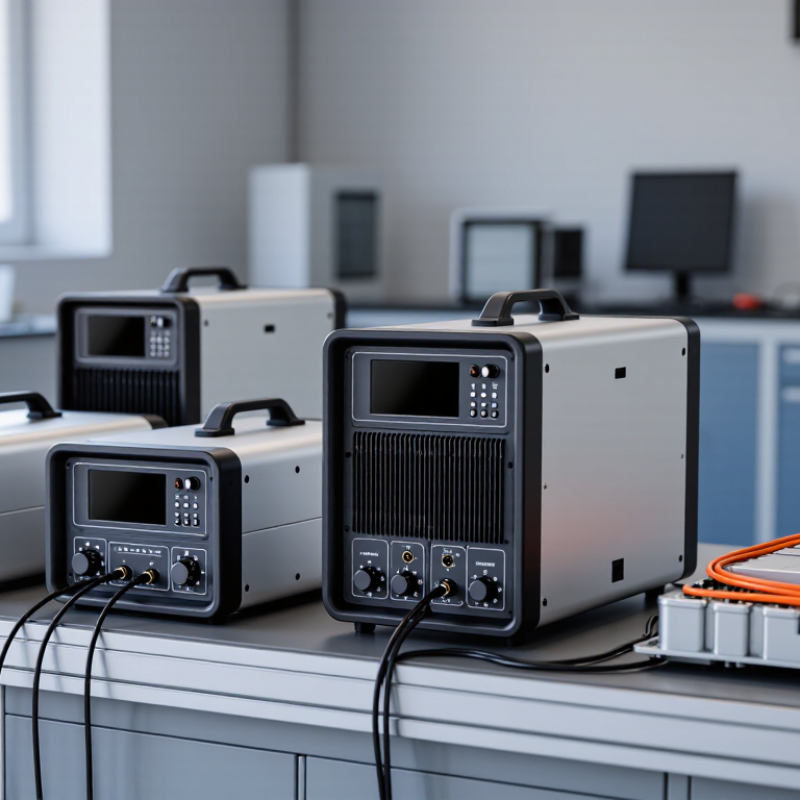
Role of Test Power Supplies in Electric Vehicle Development
Electric vehicle development depends on repeatable electrical tests, not guesswork. A programmable test power supply can simulate battery output while engineers assess inverters, onboard chargers, and other powertrain components. Adjustable voltage and current let teams examine operation across different load conditions. For example, a controlled voltage ramp can reveal whether an inverter responds smoothly as its input changes. Small changes matter. Stable output and accurate measurement help distinguish a component fault from a test-setup problem.
Some development systems also support regenerative operation, returning energy to the grid or test system when a device feeds power back. This can help evaluate energy flow without treating every test as one-way. That matters. Engineers should match supply capacity, response speed, and protection features to the device under test. Logging voltage, current, and temperature gives results useful context. No test setup is perfect: cable resistance, sensor placement, and heat can affect readings. A careful team checks these limits and repeats key measurements before drawing conclusions. Bench data helps guide design decisions, but it cannot capture every condition on the road.
| EV Test Application | Typical Power Equipment | Representative Test Range | Key Capabilities | Role in EV Development |
|---|---|---|---|---|
| Battery cell and module testing | Programmable DC battery cycler or bidirectional DC supply | Low-voltage outputs, commonly tens of volts per test channel; current and power are sized to the cell or module under test. | Controlled charge and discharge, current and voltage limits, cycling profiles, and synchronized measurement. | Evaluates capacity, efficiency, voltage behavior, and performance over charge and discharge cycles. |
| High-voltage battery pack testing | High-voltage bidirectional DC source and sink | Often up to approximately 1,000 V DC; power ratings range from tens to hundreds of kilowatts, depending on the pack and test plan. | Battery simulation, regenerative energy return, programmable profiles, and protection against overvoltage and overcurrent. | Tests pack operation, charging behavior, power limits, and responses to operating conditions without relying on a road vehicle. |
| Traction inverter testing | High-power DC source, typically paired with a motor dynamometer and measurement equipment | DC input voltage is selected to match the inverter and battery system; many test setups cover several hundred volts up to around 1,000 V DC. | Stable DC-link supply, fast transient response, programmable voltage changes, and energy recovery where supported. | Supplies the inverter during tests of power conversion, efficiency, control response, and operating limits. |
| On-board charger testing | Programmable AC source on the input side and a DC battery simulator or bidirectional DC supply on the output side | AC input equipment may support single-phase or three-phase mains ranges; DC output equipment is matched to the charger’s specified voltage and power. | Adjustable AC voltage and frequency, controlled DC loading or battery simulation, and measurement of input and output power. | Verifies charging performance, conversion efficiency, and operation under variations in input and battery-side conditions. |
| DC-DC converter testing | Programmable DC source for the input and an electronic load or DC sink for the output | Input and output ranges depend on the converter; low-voltage auxiliary systems and high-voltage traction systems require different equipment. | Independent input and load control, transient response testing, ripple measurement, and protection-limit testing. | Assesses voltage conversion, regulation, efficiency, and behavior during changing loads. |
| EV charging equipment testing | Programmable AC source or grid simulator; DC charging tests may use a high-power DC source and battery simulator | Equipment is selected for the charger’s stated AC or DC voltage, current, and power ratings; high-power DC systems can operate at several hundred volts or more. | Programmable supply conditions, controlled load profiles, communication support where required, and electrical protection. | Checks charger output, power delivery, operating limits, and response to defined charging conditions. |
Note: The ranges shown are representative engineering context, not universal specifications. Select equipment based on the device under test, its rated limits, applicable standards, and the required test profile.
Match its voltage, current, and power limits to the system under test. Check voltage and current together; maximum ratings may not be available simultaneously.
They affect how closely measurements reflect the test plan. Check accuracy, resolution, and ripple before testing a battery pack or component.
Fast transient response and programmable ramps can recreate sudden load changes. They help keep output stable, though the actual test profile still matters.
It can deliver and absorb power. During battery discharge tests, it may return energy instead of wasting all of it as heat.
Battery simulators reproduce adjustable voltage curves and fault conditions. AC grid simulators recreate input changes, such as voltage dips or frequency shifts.
Look for overvoltage, overcurrent, and overheating protection. Safety interlocks and remote shutdown also matter. Small details count.
Long, high-current runs can reveal limits that a brief bench test misses. A cool five-minute test may not tell the whole story.
No. Check continuous output, transient behavior, connections, and isolation against the real setup. A bench test can look reassuring. Maybe too reassuring.
Electric Vehicle Test Power Supplies play a vital role in developing and validating EV batteries, motors, inverters, and charging systems. By providing controlled, repeatable electrical conditions, they help engineers assess performance, efficiency, and reliability throughout the development process. Key specifications include voltage and current range, power capacity, accuracy, response time, and the ability to operate in both source and regenerative modes. Different test needs may call for programmable DC supplies, bidirectional systems, or AC power sources.
Leading EV test supplies offer precise control, flexible operating ranges, data monitoring, and protective functions such as overvoltage, overcurrent, and overheating safeguards. Selecting a suitable unit means matching its capabilities to the device under test and the planned test conditions. Safe operation also depends on following equipment instructions, checking connections and ratings, using appropriate protective measures, and ensuring the test area is properly prepared.