0%

Buying Air-Cooled DC Power Supplies is rarely a simple matter of comparing voltage, current, and price. A unit may look impressive on a specification sheet yet struggle beside a dusty test bench, a warm production line, or a load that changes sharply within milliseconds. The right choice depends on electrical performance, cooling behavior, noise, service access, and long-term operating cost.

Dr. Alex Lidow, a respected power-conversion expert, has often emphasized a practical principle: “Efficiency is not a number; it is a system decision.” That idea matters here. Higher efficiency can reduce heat, fan activity, and energy waste, but it does not automatically guarantee reliable operation. Airflow direction, ambient temperature, derating, and installation space still deserve careful inspection. Small details matter.

This guide presents 10 practical tips for selecting Air-Cooled DC Power Supplies with greater confidence. It examines output stability, transient response, protection functions, remote control, display accuracy, acoustic noise, and maintenance needs. It also considers whether the supply can support your actual workload, not only its advertised maximum rating. That difference can be costly.

No checklist is perfect. Real systems behave unpredictably.

A supply rated for 30 amps may perform poorly when operated continuously near its limit. A fan may sound acceptable during a short demonstration, then become distracting after eight hours. These are not dramatic failures, but they reveal weak purchasing decisions. Careful buyers verify specifications, request test data, and leave sensible operating headroom before committing to a model.
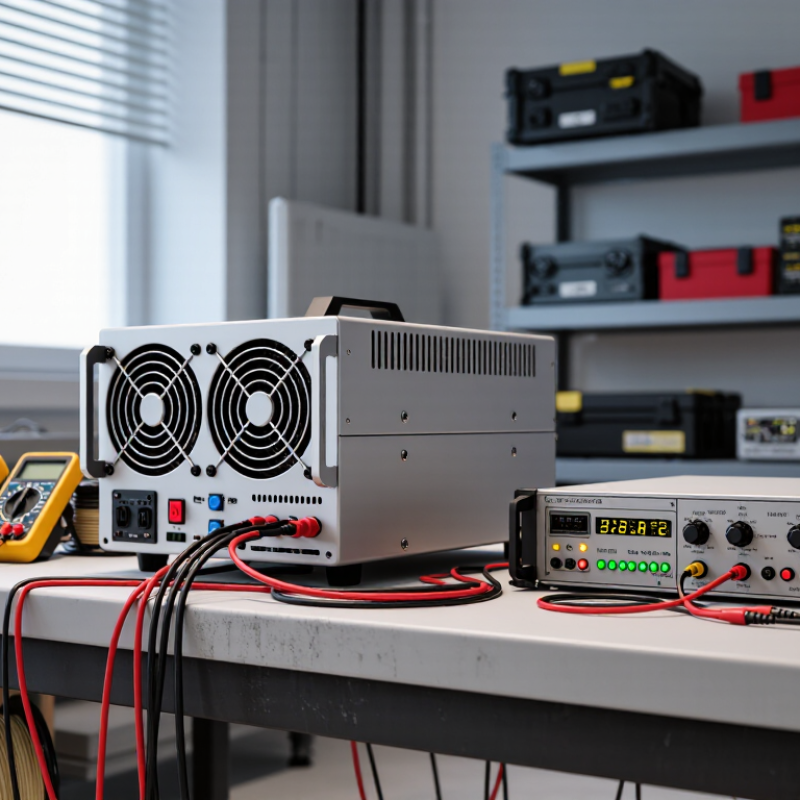
10 Tips for Buying Air Cooled DC Power Supplies

Understanding Air-Cooled DC Power Supply Basics

Understanding Air-Cooled DC Power Supply Basics

An air-cooled DC power supply converts incoming AC power into controlled direct current. Its rectifier changes the waveform, while capacitors reduce unwanted variation. A regulation circuit then maintains the selected voltage and current. In practical testing, stable output matters more than impressive specifications.

Check the operating modes. Constant-voltage mode holds the set voltage during normal loads. Constant-current mode limits output when equipment demands too much. Some units switch between these modes automatically. Watch the ripple rating. Excessive ripple can disturb sensors, communication circuits, and battery charging.

Cooling is part of the electrical design. Internal fans move air across heat sinks and power components. Leave clear space around the vents, especially in dusty workshops. Higher ambient temperatures usually require output derating. Altitude can reduce cooling performance too. Fan noise may also matter near test benches.

Small details are easy to miss.

Choose voltage and current ranges with reasonable headroom, not extreme margins. Confirm protection features, including overvoltage, overcurrent, and thermal shutdown. Review the display accuracy and remote-control connections before purchasing. I once focused too heavily on maximum current and overlooked response speed during load changes. That choice worked, but not perfectly. A slower response caused brief voltage dips in a sensitive prototype. Maintenance access matters as well. Replaceable filters and visible airflow paths can reduce troubleshooting time. Keep a simple record of temperature, load, and fan behavior during real operation.

Matching Voltage, Current, and Power Requirements

10 Tips for Buying Air Cooled DC Power Supplies

Matching voltage, current, and power requirements prevents unstable operation and unnecessary heat. Start by confirming the equipment’s rated input voltage. The supply should provide the required voltage without exceeding the device’s tolerance. A small mismatch can damage sensitive circuits. Check polarity, too.

Estimate the maximum operating current, not only the average reading. Motors, relays, and digital systems often draw short startup surges. Leave practical current headroom, usually 20 to 30 percent. More is not always better. Excess capacity can increase cost and physical size. Calculate power with P = V × I, then compare the result with the supply’s continuous rating. For example, a 24-volt load drawing 6 amps needs 144 watts. Select a higher-rated unit if the enclosure runs warm or airflow is restricted.

Air cooling depends on clear vents and reliable fan performance. Keep several centimeters around the intake and exhaust areas. Review derating curves at your actual ambient temperature. A supply rated for full power at 25°C may deliver less in a hot cabinet. Measure voltage at the load terminals, not only at the supply. Cable resistance can create a surprising drop. Also check ripple, transient response, protection features, and remote-sense compatibility. During testing, record current at startup and under peak load. I have seen designs fail because the “normal” current was measured too casually. Recheck the figures before installation.

Evaluating Cooling Performance and Operating Environment

10 Tips for Buying Air Cooled DC Power Supplies

Evaluating Cooling Performance and Operating Environment

Cooling performance begins with the inlet temperature, not the room’s average temperature. ASHRAE TC 9.9 recommends 18–27°C for many air-cooled information technology environments. A power supply installed beside a furnace-like enclosure may face much higher temperatures. Check the manufacturer’s derating curve, especially above 40°C. Output capacity often falls as internal temperature rises.

Airflow deserves a physical inspection. Measure the direction, volume, and pressure of the cooling air. Uptime Institute’s Global Data Center Survey has reported that cooling can represent roughly 30–40% of data center electricity use. Even a small airflow restriction can increase fan speed, noise, and energy demand. Dusty filters, narrow vents, and cable bundles create real resistance. They are easy to underestimate.

Altitude also matters. Thinner air removes less heat, so some units require output derating above 1,000 meters. Review fan-failure protection, over-temperature shutdown, and acoustic data under load. Laboratory values may not match a crowded cabinet. That is worth questioning. In my testing experience, a supply that passes a short bench test can still overheat during continuous operation. Select a unit with thermal margin, not merely the required wattage. Cite: ASHRAE TC 9.9 Thermal Guidelines; Uptime Institute Global Data Center Survey.

10 Tips for Buying Air Cooled DC Power Supplies

Evaluating Cooling Performance and Operating Environment

This representative derating profile shows how an air-cooled 1,000 W DC power supply may reduce allowable output as ambient temperature rises. Actual limits depend on fan airflow, installation clearance, altitude, load profile, and the manufacturer’s thermal design. Confirm the operating curve and required ventilation before purchase.

Checking Protection Features, Regulation, and Output Stability

10 Tips for Buying Air Cooled DC Power Supplies

Protection features deserve attention before rated power or enclosure size. Check for overvoltage, overcurrent, short-circuit, and thermal protection. These safeguards should recover predictably after a fault. Ask whether the unit shuts down, limits current, or restarts automatically. A clear response matters during bench testing and field maintenance. Look for accessible status indicators and documented alarm behavior. Small details count.

Regulation shows how closely output voltage follows the setting. Compare line regulation, load regulation, and ripple specifications under defined conditions. A supply may look stable with no load, then drift when motors or heaters start. Test it with the intended load, not only a multimeter. Use an oscilloscope when ripple could affect sensors or control circuits. I once trusted a voltage reading that seemed perfect, but missed brief startup dips. That mistake changed my testing routine.

Output stability also depends on airflow, ambient temperature, and cable resistance. Air-cooled equipment needs clear ventilation around its fan and intake openings. Check derating information for warm rooms and continuous operation. Longer cables can create voltage loss at the load. Measure directly at the load terminals when accuracy matters. Read the manual carefully, although manuals sometimes leave practical questions unanswered. If specifications lack test conditions, request clarification before purchasing. Reliable selection requires evidence, not optimistic assumptions.

10 Tips for Buying Air Cooled DC Power Supplies - Checking Protection Features, Regulation, and Output Stability

Tip Evaluation Dimension What to Check Typical Technical Reference Recommended Acceptance Criteria Why It Matters
1 Output Voltage and Current Range Confirm the nominal voltage, adjustment range, maximum continuous current, and operating mode. Common laboratory and industrial units provide adjustable output voltage and constant-voltage/constant-current operation. Required voltage and current should fall within the middle portion of the rated range, with at least 20% current headroom. Headroom reduces thermal stress and prevents continuous operation at the maximum rating.
2 Line Regulation Review how much the output changes when the AC input varies across its specified range. Quality regulated supplies often specify line regulation in millivolts or as a small percentage of the output setting. Select a specification compatible with the load; for precision applications, prefer a value at or below 0.05% of nominal output. Poor line regulation can cause output drift when the mains voltage changes.
3 Load Regulation Check output variation from no-load to full-rated load and review the test conditions. Well-regulated DC supplies commonly publish load regulation in millivolts or percentage terms. For sensitive electronics, target no more than 0.05% to 0.1% of the nominal output, subject to the application requirement. Stable voltage under changing load helps prevent resets, measurement errors, and component overstress.
4 Ripple and Noise Check peak-to-peak ripple, RMS noise, measurement bandwidth, and whether the value changes with load. Linear supplies generally offer lower ripple; switching supplies may require filtering for noise-sensitive loads. For general control equipment, a low-millivolt specification may be sufficient; precision circuits require a verified bandwidth-limited measurement. Excess ripple can affect analog accuracy, communications, sensors, and converter performance.
5 Over-Voltage Protection (OVP) Determine whether OVP is adjustable or fixed, how it is triggered, and whether the output latches off or recovers automatically. OVP thresholds are commonly set above the programmed output voltage and may require a manual reset after activation. Choose a threshold below the load’s absolute maximum input rating, while allowing normal setpoint tolerance and transients. OVP helps protect connected equipment from control-loop faults or accidental over-adjustment.
6 Over-Current and Short-Circuit Protection Check constant-current limiting, foldback behavior, hiccup mode, and short-circuit recovery. Many regulated units limit current electronically and are designed to tolerate a short circuit for a specified period or continuously. Verify that protection activates before the load, cable, or connector exceeds its safe current rating and that recovery is predictable. Current limiting reduces fire, wiring, connector, and semiconductor damage during faults.
7 Thermal Protection and Airflow Inspect fan control, air inlet and outlet clearance, thermal shutdown, derating, and filter requirements. Air-cooled units require unobstructed airflow and may reduce output capability at elevated ambient temperatures. Confirm operation at the actual ambient temperature and provide the manufacturer-specified clearance; do not block ventilation openings. Adequate cooling improves reliability and prevents thermal shutdown or premature component aging.
8 Output Stability and Transient Response Review long-term drift, recovery time, overshoot, undershoot, and response to rapid load changes. Specifications may include drift over time, temperature coefficient, and transient recovery under defined load steps. Use a supply whose recovery time and voltage deviation are lower than the load’s allowable limits under the intended load profile. Good dynamic performance prevents unstable operation when motors, relays, converters, or digital loads switch on and off.
9 Protection, Isolation, and Safety Ratings Check input fuse or circuit protection, output-to-earth isolation, leakage current, grounding, and applicable safety documentation. Safety requirements depend on the installation category, working voltage, environment, and end-use equipment. Require documented ratings appropriate for the installation and verify protective earth and insulation requirements before commissioning. Correct isolation and protection reduce electric-shock, fire, and equipment-damage risks.
10 Verification, Controls, and Serviceability Evaluate display accuracy, remote sensing, output terminals, calibration access, fan replacement, documentation, and test support. Remote sense compensates for voltage drop in output leads; calibration intervals and procedures vary by design. Request test data at representative voltage, current, temperature, and input conditions; select accessible controls and documented maintenance procedures. Clear verification and service procedures make performance easier to validate and help reduce downtime.
Note: Electrical specifications should be compared under equivalent test conditions, including input voltage, output voltage, load level, ambient temperature, measurement bandwidth, and cable length.

Comparing Build Quality, Controls, Compliance, and Total Cost

10 Tips for Buying Air Cooled DC Power Supplies

Build quality affects every hour of operation, not just the first inspection. Check the chassis for rigid panels, secure connectors, clean cable routing, and accessible fuses. Look inside. A reliable unit should manage airflow without exposing sensitive components to hot exhaust. Inspect the fan rating, filter access, and thermal derating curve. A supply that reaches its limit at 35°C may disappoint in a warm test area. Listen for fan noise, but do not judge cooling by sound alone. Measure the outlet temperature during a realistic load test. I once trusted a quiet prototype that overheated during continuous operation.

Controls should match your operator’s habits and your test system. Verify voltage and current resolution, display readability, lockout functions, and remote-sense accuracy. Test protection responses, including overvoltage, overcurrent, short-circuit, and overtemperature behavior. Confirm that analog or digital interfaces provide repeatable settings and useful fault information. Simple controls are often safer. However, basic panels can slow automated testing. That tradeoff deserves a real workflow trial.

Compliance requires more than a printed symbol. Request applicable safety and EMC test reports, declarations, insulation ratings, and installation instructions. Check whether approvals cover the exact model and operating conditions. Review calibration procedures and the available measurement uncertainty. Total cost includes electricity, fan replacement, calibration, training, accessories, downtime, and disposal. Compare warranty terms carefully. The cheapest purchase can become the most expensive instrument after repeated service interruptions. Leave room for uncertainty; projected savings are not guaranteed.

FAQS

Which protection features should I check before buying an air-cooled DC power supply?

Check overvoltage, overcurrent, short-circuit, and thermal protection. Confirm whether faults cause shutdown, current limiting, or automatic restart. Status indicators and documented alarms make troubleshooting easier. Small details matter.

How can I evaluate output regulation accurately?

Compare line regulation, load regulation, and ripple under stated test conditions. Test the supply with its intended load, not only a multimeter. A no-load reading may hide voltage changes during startup. Test it loaded.

Why do motors and heaters require special testing?

Motors and heaters can create sudden current demands during startup. These demands may cause brief voltage dips or unstable output. Use an oscilloscope when sensitive sensors or control circuits are involved. A perfect display reading is not enough.

How does airflow affect continuous operation?

Keep the fan, intake, and exhaust areas clear. Check derating data for warm rooms and continuous loads. Measure outlet temperature during realistic operation. Quiet is not proof.

What physical construction details indicate better build quality?

Inspect rigid panels, secure connectors, clean cable routing, and accessible fuses. Check the fan rating, filter access, and internal airflow path. Hot exhaust should not pass directly over sensitive components. Inspection beats assumptions.

Which controls and interfaces should a test system include?

Check voltage and current resolution, display readability, lockout functions, and remote-sense accuracy. Test analog or digital interfaces for repeatable settings and useful fault information. Simple controls may improve safety. Basic panels can slow automation.

What compliance documents should I request before purchase?

Request safety and EMC reports, declarations, insulation ratings, and installation instructions. Confirm that approvals cover the exact model and operating conditions. Review calibration procedures and measurement uncertainty. A printed symbol alone proves little.

How should I calculate the total cost of ownership?

Include electricity, fan replacement, calibration, training, accessories, downtime, and disposal. Compare warranty terms and expected service interruptions. The cheapest unit may become expensive after repeated failures. Projected savings are uncertain.

Conclusion

Choosing the right Air-Cooled DC Power Supplies begins with understanding how they convert and deliver regulated direct current for testing, manufacturing, laboratory, or service applications. Start by matching the required voltage and current ranges, then confirm that the unit’s maximum power capacity provides sufficient headroom for normal operation and future needs. Consider whether the cooling system can handle continuous workloads, and make sure the installation environment offers adequate airflow, suitable temperature, and reasonable dust control.

A dependable power supply should also include essential protection against overvoltage, overcurrent, overheating, and short circuits. Examine regulation accuracy, ripple, noise, transient response, and output stability to ensure reliable performance with sensitive equipment. Finally, compare construction quality, user controls, display clarity, connectivity, safety compliance, warranty coverage, maintenance needs, and total ownership cost. Evaluating these factors together will help you select a practical, durable, and efficient solution rather than focusing only on the initial purchase price.

Julian

Julian

Julian is a dedicated marketing professional with a strong understanding of the company’s products, customers, and industry landscape. Through clear communication, thoughtful research, and a practical approach to strategy, he helps translate complex product features into meaningful benefits for......