
0%

Choosing a high-voltage DC supply is not a catalogue exercise. The right unit must deliver stable voltage and current under the load’s real operating conditions. Grand View Research’s Power Supply Market report estimated the global market at $32.36 billion in 2023, with projected growth through 2030. That broad figure does not isolate high-voltage DC equipment, but it reflects expanding demand for dependable power conversion. The specific application still matters more than the market trend.

Professor Frede Blaabjerg, a prominent power-electronics researcher, has described power electronics as “a key technology for the future energy system.” That perspective is useful when comparing High Voltage DC Power Supplies: performance depends on the supply and the surrounding system. Check the required voltage range, output current, ripple, regulation, and transient response. Then inspect isolation, protection, cooling, and remote-control options. A supply rated for 10 kV may still be unsuitable if its current limit, stability, or connector arrangement does not fit the load. Small details matter.

Industry specifications and reports provide a starting point, not a substitute for validation. Review the manufacturer’s test conditions and confirm whether ratings apply continuously or only briefly. Consider a benchtop test with the actual cable length and load; long leads can affect stability and measurement accuracy. A simple checklist helps, but it can miss awkward operating conditions. That is worth admitting. The strongest choice balances electrical performance, safety features, service support, and room for future changes—without paying for capacity the application will never use.
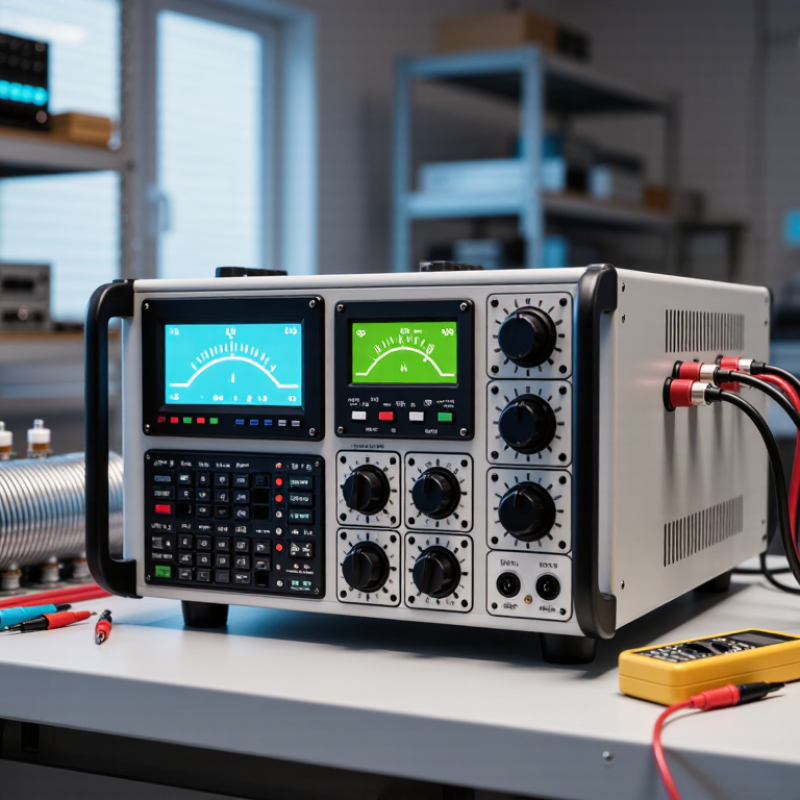
How to Choose a High Voltage DC Power Supply?

Identify the Application and Required Voltage Range

Start with the load, not the supply catalogue. A battery-pack tester, an X-ray system, and a high-voltage detector need different output ranges and operating behavior. For battery testing, identify the pack’s minimum and maximum voltage across charge, discharge, and fault checks. For detector bias, check the required voltage stability and low ripple; a supply that reaches the target voltage but drifts under load may still give poor results. Leave suitable voltage headroom, but avoid excessive oversizing, which can reduce useful adjustment resolution.

Application demand is changing. The International Energy Agency’s Global EV Outlook 2024 reports that electric-car sales grew from about 10 million in 2022 to nearly 14 million in 2023. That growth brings more battery and charging equipment into test labs, though it does not define a universal test voltage. Use the equipment specification and test procedure to set the range. Check the maximum voltage, current, duty cycle, and load capacitance, then confirm the supply’s output stability at the actual operating point. Small details matter. A long test cable can add capacitance, while a sudden load change can expose weak regulation. I have seen voltage range treated as a simple maximum; that assumption deserves a second look. Cite the IEA report, and record the chosen limits and test conditions for repeatable results.

Calculate the Needed Output Current and Power

When choosing a high-voltage DC supply, size it for the load’s real operating point, not just its peak voltage. Calculate output power with P = V × I, then find current with I = P ÷ V. For example, a device needing 40 watts at 20 kilovolts draws 2 milliamps. Check both the supply’s continuous ratings and its limits during startup or brief load changes. A capacitive load can demand a sharp current pulse. Small detail. It can matter.

The application scale is growing: the International Energy Agency’s Renewables 2023 report recorded nearly 510 gigawatts of new renewable capacity worldwide in 2023, with solar PV providing about three-quarters of the increase. For photovoltaic testing, estimate demand across the full voltage range, since current may change as the test object warms or its operating condition shifts. Add headroom only after measuring those variations; a blanket margin can oversize the supply or miss a short peak. Review ripple, settling time, duty cycle, and output protection alongside watts and amps. A neat calculation is not enough. I would recheck the assumptions against bench measurements, especially when the load is nonlinear or capacitive.

Compare Regulation, Ripple, and Output Stability

When choosing a high-voltage DC power supply, compare regulation under the conditions your equipment will actually face. Load regulation shows how much output voltage shifts as current demand changes. Line regulation describes changes caused by variations in the input supply. Check the test ranges, temperature, and warm-up time behind each specification; numbers measured under different conditions may not be directly comparable. Small details matter. A supply rated for a steady load may behave differently when a device switches rapidly or draws brief current pulses.

Ripple is the periodic variation riding on the DC output, while noise can include less predictable disturbances. Check the specified measurement bandwidth and probe setup. A long probe ground lead can make a clean output look noisy, or hide useful detail. Stability is different: it describes how well voltage settles after a load change, including overshoot, undershoot, and recovery time. Test with a representative load and a properly rated differential probe, following the equipment’s safety instructions. Not always. A low ripple figure alone does not guarantee stable operation. It is tempting to rank supplies by one headline number, but actual load behavior deserves more attention. If results vary between tests, document the setup and repeat the measurement before drawing conclusions.

How to Choose a High Voltage DC Power Supply? - Compare Regulation, Ripple, and Output Stability

Indicative selection benchmarks only. Specifications vary by design, voltage range, load, and measurement conditions; compare suppliers’ datasheets using the same test method.
Application priority Typical output range Load regulation target Line regulation target Ripple target Output stability target What to check before choosing
Precision measurement and laboratory testing 0–1 kV to 0–10 kV ≤0.01% of full scale (FS) ≤0.01% FS ≤0.01% FS RMS, where specified ≤0.01% FS over 8 hours, under stated conditions Check warm-up time, temperature coefficient, readback accuracy, and whether ripple is specified as RMS or peak-to-peak.
General-purpose high-voltage testing 0–1 kV to 0–30 kV ≤0.1% FS ≤0.05% FS ≤0.1% FS RMS or peak-to-peak, as stated ≤0.05% FS over 8 hours, under stated conditions Confirm rated current, output polarity, remote programming, voltage readback, and protection limits.
Low-ripple detector, sensor, or tube bias 0–0.5 kV to 0–10 kV ≤0.05% FS ≤0.05% FS ≤0.01% FS peak-to-peak, if available ≤0.02% FS over 8 hours, under stated conditions Ask for ripple bandwidth and measurement setup; switching frequency and filtering can affect sensitive measurements.
Higher-current electrostatic or component testing 0–1 kV to 0–5 kV ≤0.1% FS at rated load ≤0.05% FS ≤0.1% FS RMS, where specified ≤0.05% FS over 8 hours, under stated conditions Check continuous current and power ratings, cooling, capacitive-load behavior, and current-limit response.
Automated test system or multi-channel setup Typically 0–1 kV to 0–10 kV per channel ≤0.05% FS ≤0.05% FS ≤0.05% FS RMS, where specified ≤0.05% FS over 8 hours, under stated conditions Verify channel isolation, interface and programming resolution, output sequencing, interlocks, and fault reporting.

FS means full scale. Regulation and stability figures are commonly stated as a percentage of full scale, but some specifications use the set value; check the definition and test conditions. For safety, also verify insulation ratings, discharge provisions, interlocks, and overvoltage protection.

Check Protection Features and Operating Conditions

A high-voltage DC supply should be judged by its protections, not output voltage alone. Check for overvoltage and overcurrent limits, short-circuit protection, thermal shutdown, and a remote-inhibit input. For systems with exposed conductors, confirm interlocks and a controlled discharge path. Stored charge can remain after power is removed. That detail is easy to miss.

Match operating conditions to the specification sheet. Check input-voltage variation, load range, ripple, duty cycle, ambient temperature, airflow, humidity, and installation altitude. Ask for derating curves; a unit rated at full output in a cool test room may behave differently inside a warm, enclosed cabinet. IEC 61010-1 provides safety requirements for measurement, control, and laboratory equipment.

The U.S. Department of Energy’s 2024 data center report estimates U.S. data centers used about 176 TWh in 2023, or 4.4% of national electricity use. That figure is not an HVDC failure statistic, but it highlights why heat and electrical loading deserve careful attention in power-dense installations.

Tips: Verify protection thresholds against your load, then test the supply with the actual cable length and enclosure. Record temperatures during a sustained run. A spec sheet can still mislead. Recheck the conditions you assumed.

Verify Compliance, Reliability, and Support**

How to Choose a High Voltage DC Power Supply?

Verify Compliance, Reliability, and Support

Start by matching the supply’s documented ratings to your installation, not just its advertised output. Check the applicable safety and electromagnetic compatibility requirements for the equipment’s intended use and location. Ask for test reports and clear information on insulation, grounding, and protection features. If a document is vague, request clarification before purchase. Small details matter.

Reliability shows up under real operating conditions. Review output stability, ripple, transient response, cooling needs, and performance across the expected load range. A unit that meets its rating only in a cool laboratory may need derating in a warm cabinet. Check how overloads and faults are handled, and whether the supply can operate continuously at your planned settings. I have seen selection decisions focus heavily on peak voltage while overlooking airflow and duty cycle. That is easy to miss.

Support matters after commissioning, too. Confirm access to calibration services, replacement parts, operating manuals, and practical troubleshooting help. Ask how quickly technical questions are usually answered, and whether support staff can interpret measurements from your setup. Keep records of test conditions and configuration changes; they make fault diagnosis less dependent on memory. No supplier can prevent every problem, and response promises are not guarantees. Still, clear documentation and reachable expertise can reduce downtime when an unexpected issue appears.

FAQS

How do I choose the right voltage range?

Start with the equipment and test procedure, not a supply catalogue. Record minimum and maximum voltage across normal and fault checks. Leave useful headroom, but excessive oversizing can reduce adjustment resolution.

Do battery testers and detector systems need the same supply?

No. Battery testing may cover changing pack voltages, while detector bias may require steady output and low ripple. Check each device’s specifications.

Which operating details should I confirm?

Check maximum voltage, current, duty cycle, and load capacitance. A long test cable can add capacitance. Small details matter.

What does load regulation tell me?

It shows how much output voltage shifts when current demand changes. Compare results under similar loads, temperatures, and warm-up times.

How are ripple and noise different?

Ripple is periodic variation on the DC output. Noise can include less predictable disturbances. Measurement bandwidth and probe setup affect the readings.

Does low ripple guarantee stable operation?

Not always. Stability also involves overshoot, undershoot, and recovery after a load change. I used to focus too much on one headline number.

How should I measure output stability?

Use a representative load and a properly rated differential probe. Follow the equipment’s safety instructions. Record the setup.

What should I do if test results vary?

Check cable length, probe placement, and load conditions. Repeat the measurement before drawing conclusions. That extra check is easy to skip.

Conclusion

Choosing High Voltage DC Power Supplies begins with understanding the application and the voltage range it requires. Consider how the supply will be used, whether the output must be adjustable, and what voltage levels are needed during normal operation. Next, calculate the required output current and power, allowing suitable capacity for the connected load and expected operating conditions.

Compare voltage and current regulation, output ripple, and stability to ensure the supply can deliver consistent performance. Check for relevant protection features, such as safeguards against overload or overtemperature, and confirm that the unit can operate reliably in the intended environment. Finally, review applicable compliance requirements, product reliability information, documentation, and the availability of technical support. Evaluating these factors together helps you select a supply that meets your electrical needs and supports dependable operation over time.

Ethan

Ethan

Ethan is a professional marketing specialist with a strong understanding of product strategy, customer needs, and industry trends. As a key member of our company, he combines practical marketing experience with in-depth knowledge of our products and services, helping customers better understand how......